
What Is the Best Battery Inverter from China?
Choosing the best battery inverter from China requires more than comparing prices, wattage, or attractive product photos. The right unit must convert stored energy efficiently, protect connected equipment, and perform reliably under changing temperatures. Dr. Imre Gyuk, a respected energy-storage specialist, has said, “Energy storage is the key to a more resilient and reliable grid.” That principle matters in every installation, from a small home backup system to a commercial solar project.
A strong battery inverter should match the battery chemistry, voltage range, and expected load. Installers should examine peak surge capacity, thermal management, monitoring software, and warranty support. A quiet fan, clear display, and stable connection can matter more than impressive marketing numbers. Manufacturing experience also deserves attention. Chinese suppliers vary widely in testing depth, component quality, documentation, and after-sales service.
Field feedback can reveal details that brochures often hide. Does the inverter restart smoothly after a power interruption? Can technicians obtain replacement parts quickly? Does the software report faults clearly, or leave users guessing? These questions deserve practical answers. Still, no single model is perfect. A higher-priced unit may offer better control, while a budget model may suit simpler installations. That trade-off is easy to overlook.
This guide evaluates the best battery inverter options from China through performance, safety, compatibility, durability, and supplier credibility. It also recognizes an uncomfortable reality: specifications alone cannot predict years of dependable operation. Careful testing helps, but uncertainty remains. Buyers should verify current certifications, installation requirements, and regional support before making a final decision.
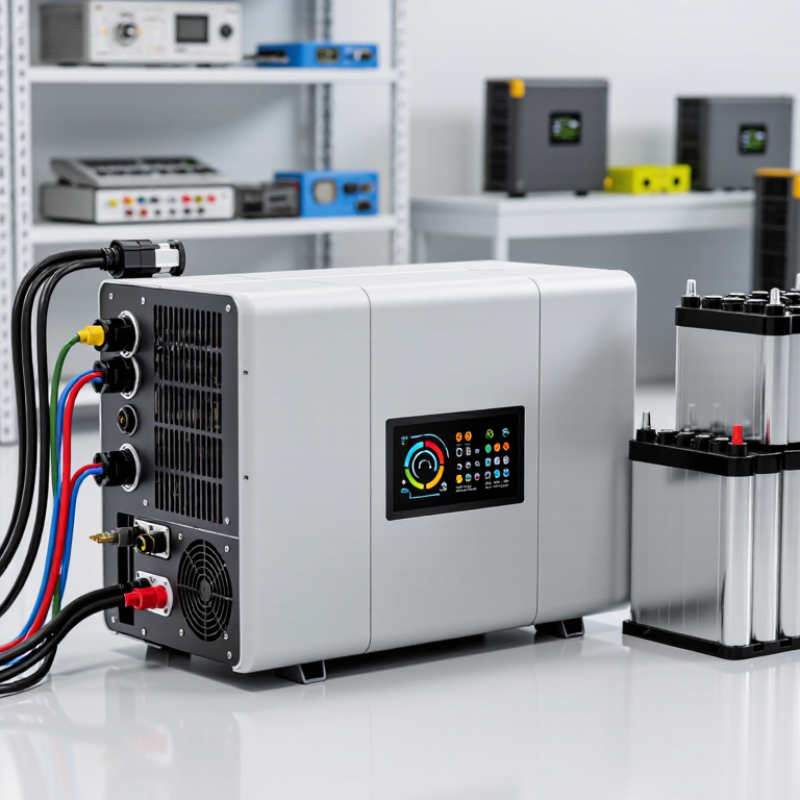
Table of Contents
[Hide]
What Makes the Best Battery Inverter? A 97%+ Efficiency Benchmark
What Is the Best Battery Inverter from China?
What Makes the Best Battery Inverter? A 97%+ Efficiency Benchmark
A 97%+ efficiency rating is an important starting point, not a complete buying decision. It usually describes peak DC-to-AC conversion under specific voltage, load, and temperature conditions. Real homes rarely operate at that perfect point. Nighttime loads may drop below 20%, while pumps and compressors create short surges.
Look beyond the headline number. Request independent test data showing efficiency at 10%, 25%, 50%, and 100% load. Check whether the figure includes standby consumption, battery charging, and switching losses. A reliable inverter should also provide clear thermal limits, fault records, and protection details. Applicable safety certifications and traceable factory testing add useful confidence.
In practical commissioning, cable length and battery voltage can change performance noticeably. Smaller cables may create extra heat and voltage loss. Poor ventilation can reduce output before the published rating suggests trouble. This is easy to underestimate. I would also question unusually high claims without test conditions. A 97.5% peak result may look impressive, yet a lower average efficiency could cost more over years of daily cycling. Strong technical support matters too, especially when firmware updates, grid settings, or battery communication need adjustment. The best option is not simply the most efficient unit from China. It is the unit whose measured performance, documentation, protection design, and service process remain dependable in your actual installation.
What Is the Best Battery Inverter from China? - What Makes the Best Battery Inverter? A 97%+ Efficiency Benchmark
| Evaluation Dimension | Recommended Benchmark | Typical High-Quality Range | Why It Matters |
|---|---|---|---|
| Peak Conversion Efficiency | ≥ 97% | 97.0%–99.0% | Reduces energy losses during battery charging and discharging. |
| Weighted or European Efficiency | ≥ 96% | 96.0%–98.0% | Reflects efficiency across a range of realistic operating loads rather than only at peak power. |
| Continuous Output Power | Matched to the load profile | 3 kW–20 kW for residential and small commercial systems | Prevents overheating, nuisance shutdowns, and insufficient backup capacity. |
| Short-Term Surge Capability | At least 150% of rated power for several seconds | 150%–200% | Supports motor starts from pumps, refrigerators, compressors, and other inductive loads. |
| Battery Voltage Compatibility | Designed for the selected battery architecture | 48 V low-voltage systems or 100–600 V high-voltage systems | Correct voltage matching improves safety, efficiency, and battery lifespan. |
| Battery Chemistry Support | Lithium iron phosphate and other approved chemistries | Configurable charge and discharge parameters | Flexible settings allow safe integration with different battery packs and BMS platforms. |
| Grid and Off-Grid Operation | Seamless grid-connected and backup modes | Automatic transfer in approximately 10–20 ms for backup-capable models | Maintains power continuity for sensitive household and commercial equipment. |
| Power Factor Capability | 0.99 at rated load where required | 0.99 leading or lagging, depending on model and grid code | Improves utilization of the electrical network and reduces reactive-power penalties. |
| Protection Functions | Comprehensive electrical and thermal protection | Overvoltage, undervoltage, overcurrent, short circuit, overload, overtemperature, and anti-islanding | Protects the inverter, battery, connected loads, and utility network. |
| Operating Temperature | Suitable for the installation environment | Approximately −20°C to 50°C, with derating at higher temperatures | Reliable thermal performance is essential in outdoor and equipment-room installations. |
| Ingress Protection | IP65 or higher for outdoor installation | IP65–IP66 | Helps protect internal components from dust and water exposure. |
| Cooling Design | Temperature-controlled cooling with low maintenance | Natural convection for smaller units; intelligent fan cooling for higher-power units | Effective cooling supports stable efficiency and longer component life. |
| Communication Interfaces | Open, well-supported communication options | CAN, RS485, Ethernet, Wi-Fi, and optional cellular monitoring | Enables BMS coordination, remote diagnostics, firmware updates, and system monitoring. |
| Safety and Compliance | Certification for the target market | Applicable IEC, UL, EMC, grid-connection, and local electrical requirements | Verified compliance simplifies approval, installation, insurance, and long-term operation. |
| Warranty and Serviceability | At least 5 years, with clear support terms | 5–10 years, depending on product and service plan | Accessible technical support and replaceable components reduce lifecycle risk and downtime. |
Note: The figures shown are general engineering benchmarks and typical market ranges. Actual performance depends on operating temperature, load level, battery voltage, installation conditions, grid requirements, and independent certification test methods.
Related Posts
-

China Top 10 Battery Inverter Manufacturers How to Choose?
-

China Top Solar Inverter Suppliers for Global Buyers
-
Best Solar Panel System with Battery Options for Your Home 2026?
-
How to Choose the Right Solar Panel Kit with Battery for Your Home?
-

Top 10 Best Solar Panel Install Tips for Maximum Efficiency?
-

How to Choose the Right RV Solar Kit for Your Travel Adventures?