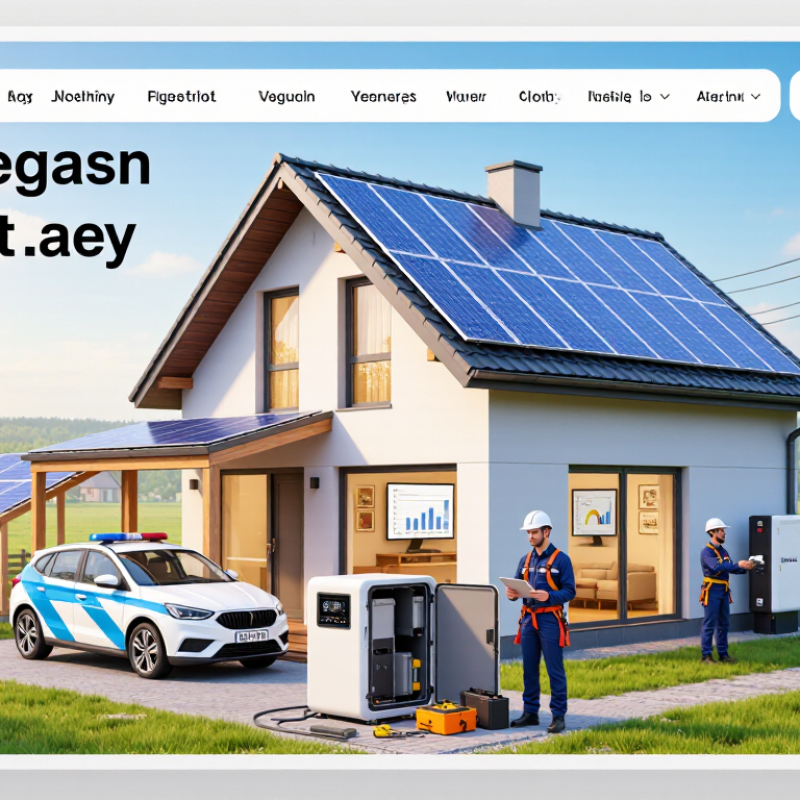
Choosing a solar installation supplier in 2026 requires more than comparing panel prices. The right partner should combine technical skill, transparent communication, reliable equipment, and proven project experience. A polished website is useful, but it is not evidence of quality.
This guide examines practical details that buyers can verify before signing a contract. Look for documented certifications, trained installers, clear production estimates, and warranties written in plain language. Ask who will handle permits, grid connection, inspections, and future maintenance. A dependable supplier should explain each stage without hiding behind technical terms.
Real project evidence matters. Request recent customer references, installation photographs, and details about similar roof types. A supplier that has worked on a shaded suburban roof may understand your concerns better than a company showing only large commercial arrays. Check the proposed inverter, mounting system, battery options, and monitoring platform. Small component choices can affect safety and long-term performance.
Price still matters.
However, the lowest quote may exclude essential services. It can omit structural checks, replacement labor, or realistic energy-loss assumptions. Even experienced buyers can overlook these gaps when several proposals look similar. I would also question estimates promising perfect savings, because weather, shading, tariffs, and household usage change over time.
A trustworthy solar installation supplier welcomes difficult questions. It provides a written scope, realistic timelines, and accessible support after commissioning. By evaluating evidence instead of promises, homeowners and businesses can make a more confident decision in a rapidly changing market.
How to Choose a Solar Installation Supplier in 2026?
A solar installation supplier does more than deliver panels. The supplier converts a roof, site, or industrial yard into a working energy system. This includes shading analysis, load assessment, system design, equipment sourcing, permits, grid coordination, and installation planning. The International Energy Agency reported that solar PV will provide most renewable capacity growth through 2030. That growth makes technical coordination more important, not less.
A capable supplier should explain every major decision in plain language. Ask for a detailed layout, production estimate, equipment specifications, and a realistic project schedule. The supplier should also manage safety procedures, cable routing, inverter settings, monitoring access, and commissioning tests. IRENA reported that global renewable capacity grew by 585 gigawatts in 2024, with solar contributing the largest share. More projects also mean more pressure on installation quality.
After commissioning, the supplier should provide system training, performance checks, maintenance procedures, and warranty coordination. It should explain what happens when output falls during heat, dust, or partial shading. A promise of “zero maintenance” deserves careful questioning. No installation is flawless. Weather data can be incomplete, and estimated production can miss local conditions. A reliable supplier admits these limits, documents assumptions, and offers corrective steps. Check its licenses, insurance, trained technicians, safety records, and completed projects before signing. The strongest supplier is not always the cheapest. It is the one that remains accountable after the final inspection.
Before contacting a solar installation supplier, define your project requirements in writing. Start with twelve months of electricity bills, not a rough monthly guess. Separate daytime consumption from evening demand. Identify essential loads, such as refrigeration, water pumps, internet equipment, and medical devices. Note previous outages and their typical duration. My first estimate was too optimistic because I ignored seasonal heating demand. Real usage data prevents that mistake.
Inspect the property carefully. Record usable roof area, orientation, tilt, shading, roof age, and cable distances. A qualified professional should assess structural capacity and local electrical requirements. Set a target for annual energy production, backup hours, battery capacity, and future expansion. Include permits, inspections, maintenance, and replacement costs in the budget. Leave room for change. Family needs rarely remain fixed.
Turn these details into measurable supplier questions. Request a system diagram, production estimate, equipment specifications, warranty terms, monitoring features, and an itemized price. Check whether proposed components meet applicable safety standards. Ask how shading, cloudy weather, and battery degradation affect performance. Compare design assumptions, not just panel counts. A perfect forecast is impossible. That matters. Record every promise in writing, then have an independent professional review the proposal before signing.
Choosing a solar installation supplier in 2026 requires more than comparing prices. The IEA’s Renewables 2024 report recorded about 420 GW of new solar photovoltaic capacity in 2023. That rapid expansion increases the importance of supplier reliability. Request project references from similar climates, installation dates, output records, and warranty-claim histories. Speak with at least two former customers. Ask for evidence.
Evaluate whether the supplier understands the complete system, not only the panels. Review module degradation rates, temperature coefficients, inverter compatibility, mounting-load calculations, and monitoring options. Certificates should include relevant IEC testing, such as IEC 61215 and IEC 61730 for photovoltaic modules. ISO 9001 can support quality management, while ISO 14001 indicates environmental controls. However, certification is not a guarantee of good installation. Check the issuing body, certificate scope, expiry date, and tested product model. IRENA’s Renewable Power Generation Costs in 2023 reported a 12% reduction in utility-scale solar costs during 2023, yet cheaper equipment may create higher maintenance costs later. A supplier should explain its assumptions clearly. If it avoids questions about replacement parts, response times, or local technicians, treat that as a warning. I would also compare the proposed energy yield with independent solar-resource data, because optimistic estimates are easy to present and difficult to recover from.
Recommended 100-point evaluation framework for comparing supplier experience, product quality, certification evidence, service capability, and commercial reliability.
The weighting prioritizes technical compliance and product reliability while still considering installation experience, after-sales support, delivery performance, and total cost. Buyers should verify certificates, test reports, references, warranty terms, and delivery records before making a final decision.
In 2026, choosing a solar installation supplier requires more than comparing the final price. Ask each supplier for a detailed quote with panel capacity, inverter type, mounting materials, labor, permits, and estimated annual production. Compare system size and expected output, not only the equipment count. A low price may hide missing electrical work or limited after-sales support. Request a site assessment with roof shading, wiring distance, and panel orientation clearly recorded. Use a simple comparison sheet.
Warranty language deserves careful attention. Check product, workmanship, and roof-penetration coverage separately. Find out whether labor remains covered if a component fails. A ten-year workmanship warranty can differ greatly between suppliers. Ask who handles claims and how quickly technicians usually respond. Do not accept vague promises. Request the terms in writing.
Financing deserves patience. Compare the cash price, deposit, interest rate, loan term, fees, and total repayment. Then examine any payment changes after an introductory period. Some offers look affordable because costs are spread over many years. Service matters too. Ask for maintenance procedures, monitoring access, emergency contacts, and typical repair timelines. Get response times in writing. Keep every document, including production estimates and approved design drawings. One honest warning: projected savings may not match your actual results. Weather, household usage, and future electricity rates can change the calculation. Recheck the assumptions before signing.
| Comparison Dimension | What the Quote Should Show | Useful Market Benchmark or Standard | Documents or Questions to Verify | Potential Warning Sign |
|---|---|---|---|---|
| System Size and Energy Yield | Installed capacity in kW, estimated annual production in kWh, production assumptions, shading losses, and degradation assumptions. | A production estimate should be based on the site location, roof orientation, tilt, shading, weather data, and system losses rather than on system size alone. | Request the layout, shading analysis, annual production model, and the estimated production for each month. | The quote guarantees savings or production without showing the assumptions behind the calculation. |
| Price Transparency | Total contract price, price per installed watt, equipment costs, labor, permitting, electrical upgrades, monitoring, taxes, and optional items. | A complete quote should identify all exclusions and state whether the price is fixed or subject to change after the site survey. | Ask whether structural work, main-panel upgrades, trenching, roof repairs, batteries, and utility fees are included. | A low headline price excludes essential work that appears later as a change order. |
| Equipment Specification | Module wattage and efficiency, inverter type, mounting method, battery capacity if applicable, and equipment model documentation. | Modern residential modules commonly have efficiency ratings above 20%, while inverter selection should match the system design and local electrical requirements. | Confirm datasheets, certification for the installation jurisdiction, compatibility between modules and inverters, and replacement availability. | The quote lists only a generic equipment category such as “premium panels” or “high-efficiency inverter.” |
| Workmanship Warranty | Coverage period, covered defects, roof penetrations, labor for repairs, exclusions, transferability, and claim process. | Residential workmanship coverage commonly ranges from about 5 to 12 years, although terms vary considerably by installer and contract. | Read the actual warranty document and confirm who pays labor, shipping, removal, reinstallation, and roof-related repair costs. | The installer describes a warranty verbally but does not provide written terms before signing. |
| Module Product Warranty | Product-defect coverage, performance warranty, degradation schedule, claim procedure, and warranty transfer rules. | Many current solar modules provide approximately 10 to 25 years of product coverage and a long-term performance guarantee; exact terms depend on the equipment. | Verify the original manufacturer warranty, the guaranteed output at the stated year, and who handles a product claim. | The quote treats a performance guarantee as coverage for installation defects. |
| Inverter Warranty | Standard warranty duration, optional extension, replacement process, labor coverage, and whether monitoring equipment is included. | Residential inverters often carry about 10 to 15 years of standard product coverage, with longer extensions available for some products. | Ask whether a replacement inverter includes labor and whether the installer remains available after the original installation period. | A long module warranty is advertised while the inverter warranty and service responsibilities are unclear. |
| Battery Storage | Usable capacity, continuous and peak power, round-trip efficiency, cycle or throughput limit, backup circuits, and warranty duration. | Many residential battery warranties are around 10 years and may also include a cycle or energy-throughput limit. | Compare usable rather than nominal capacity and confirm whether whole-home backup requires additional hardware or load management. | The quote compares batteries only by nominal kWh and does not state usable capacity or throughput limits. |
| Financing Cost | Cash price, financed price, APR, loan term, monthly payment, dealer or origination fees, prepayment terms, and total repayment. | A lower advertised monthly payment can result from a longer term or an upfront fee; APR and total repayment are more useful comparison measures. | Request a complete amortization schedule and compare the financed total with the cash price. | The offer highlights the monthly payment but omits APR, fees, term length, or total amount paid. |
| Lease or Power Purchase Agreement | Contract term, initial payment, annual escalator, system ownership, production obligations, buyout options, and property-transfer rules. | Long-term third-party ownership agreements commonly run for roughly 15 to 25 years; the exact payment escalation and transfer terms are critical. | Review the transfer process when selling the property and compare the projected total payments with purchase financing. | The contract requires a buyer to assume the agreement but provides no clear transfer timeline or qualification rules. |
| Permits and Interconnection | Responsibility for design approval, building and electrical permits, utility application, inspection, and permission to operate. | Grid-connected systems generally require approval from the relevant authority and utility before normal operation and export. | Ask who pays application fees and who resolves failed inspections, utility delays, or required design changes. | The contract gives no completion milestone for utility approval or permission to operate. |
| Installation Schedule | Site survey date, design approval, equipment order, installation window, inspection, utility approval, and final payment milestone. | The total timeline varies with permitting, utility workload, equipment availability, weather, and project complexity; milestones should be written into the contract. | Confirm cancellation rights and whether final payment is due before inspection and system activation. | The supplier requests full payment before installation, inspection, or system commissioning. |
| Service and Monitoring | Monitoring platform, service response time, maintenance responsibilities, troubleshooting process, and post-installation contact method. | Solar systems generally have low routine maintenance needs, but monitoring should identify significant production or equipment faults. | Ask who receives alerts, how service tickets are opened, and whether diagnostic or truck-roll fees apply after the warranty period. | The installer has no documented service process or relies only on a sales representative for technical support. |
| Installer Credentials | Business registration, electrical licensing, insurance, relevant certifications, local experience, and subcontractor responsibilities. | Licensing and permit requirements vary by jurisdiction, so credentials should be checked with the applicable licensing authority. | Verify license status, general liability and workers’ compensation insurance, and the identity of the party responsible for the installation. | The contracting entity, installing entity, and warranty provider are different companies with unclear responsibilities. |
| Roof and Structural Assessment | Roof age and condition, structural review, attachment method, flashing details, removal and reinstallation policy, and repair responsibility. | Solar modules can remain in service for decades, so the expected remaining roof life should be considered before installation. | Ask whether roof repairs or replacement are required before installation and obtain written responsibility for leak-related claims. | The supplier promises a roof warranty without inspecting the roof or defining coverage limitations. |
| Contract Protection | Cancellation rights, change-order procedure, dispute process, completion definition, warranty terms, and ownership of renewable-energy attributes. | The signed contract should match the final quote and identify every material assumption, exclusion, and payment milestone. | Compare the contract line by line with the proposal and obtain independent legal or consumer advice for complex financing. | The salesperson’s promises are not included in the written agreement. |
| Overall Value | Compare total cost, expected useful energy, warranty quality, financing cost, service capability, and contract risk together. | The cheapest quote is not necessarily the lowest-cost system over its operating life; lifecycle cost and expected performance should be considered. | Create a side-by-side comparison using the same system size, production assumptions, warranty scope, financing basis, and service terms. | The decision is based on one headline metric, such as price per watt or monthly payment, without reviewing the full contract. |

Choosing a solar installation supplier in 2026 requires contract discipline, not only price comparison. IRENA’s Renewable Capacity Statistics 2024 reported about 346 GW of new solar capacity in 2023. Rapid growth increases installer demand, but quality can vary.
Request a contract with clear equipment specifications, installation milestones, payment triggers, and change-order controls. Define expected energy output carefully. Include warranty periods, exclusions, performance testing, and remedies for missed deadlines. Confirm the supplier holds required local licenses and follows electrical, fire, structural, and grid-interconnection rules. Ask for permit records, insurance certificates, trained-worker evidence, and independent inspection procedures. A low bid may hide missing compliance work.
Tips: Contact two recent customers. Ask who fixed faults, how quickly, and whether spare parts were available. Require a commissioning file with test results, wiring diagrams, monitoring access, and maintenance instructions. Industry guidance from IEA PVPS stresses reliable system operation and accurate performance monitoring as solar fleets expand. I still treat polished promises as unproven. Read every exclusion. Do not rely on verbal support. Specify response times, remote-monitoring duties, site-visit charges, and escalation contacts. NREL research also shows that degradation and maintenance assumptions affect long-term production estimates, so request the calculation method behind every forecast. A perfect checklist does not exist. Ask uncomfortable questions anyway.