China Top Solar Panel and Battery Innovations for Sustainable Energy Solutions?
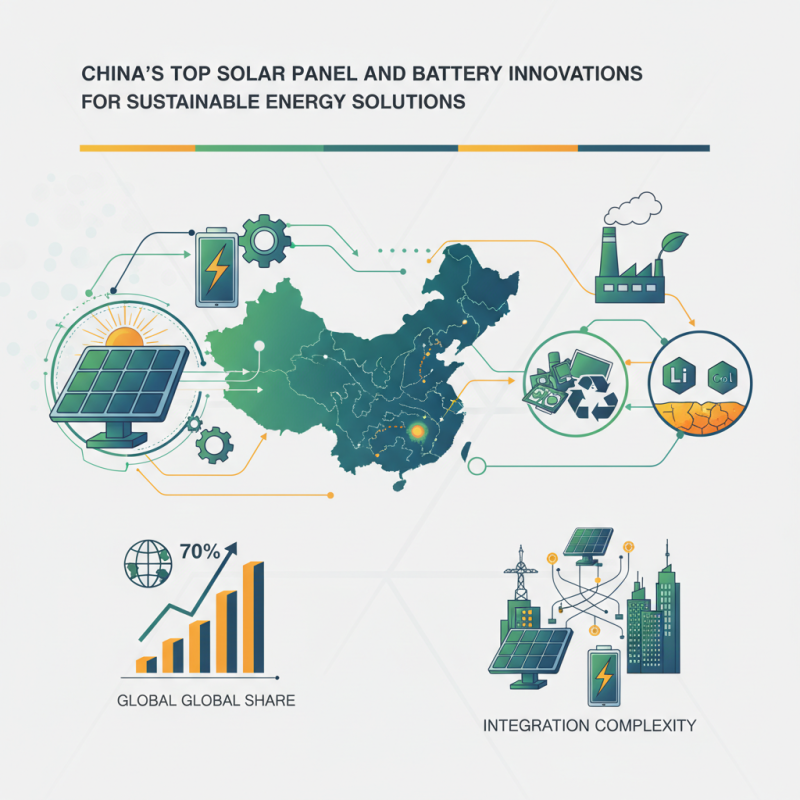
China is leading the way in solar panel and battery innovations, crucial for sustainable energy solutions. According to the International Energy Agency (IEA), China's share of global solar panel production reached over 70% in 2022. This solidifies its position as a powerhouse in renewable energy. Industry experts like Dr. Li Wang, a renowned researcher in solar technologies, state, "China's advancements in solar panel and battery efficiency are transformative for our energy future."
Despite these remarkable achievements, there are challenges. The rapid growth of the solar panel and battery market also raises concerns about sustainability in materials and recycling. The growing demand for lithium and cobalt can lead to environmental degradation if not managed properly. As the industry expands, it is essential to reflect on these issues and enhance our frameworks for environmental accountability.
Furthermore, while advancements in technology are impressive, there remain gaps in the integration of these solutions into existing infrastructures. Efficiently pairing solar panel and battery systems with urban energy grids is complex. Addressing these issues will be vital for unlocking the full potential of solar energy in China and beyond.
China's Dominance in Global Solar Panel Manufacturing and Capacity
China leads the world in solar panel manufacturing, producing over 60% of global solar panels in 2022. This dominance is due to advancements in technology and government support. A report from the International Renewable Energy Agency (IRENA) shows China's solar capacity has reached 392 gigawatts, far surpassing any other nation. This impressive growth highlights a commitment to clean energy.
Investments in innovation are crucial. Chinese firms are rapidly developing next-generation solar technologies, such as bifacial solar panels. These panels can harness sunlight from both sides, potentially increasing energy output by 10-20%. Yet, challenges remain. Environmental concerns about production processes and recycling of solar panels must be addressed. Without sustainable practices, the long-term effects of this solar boom could undermine its benefits.
Further, China’s solar battery innovations are also noteworthy. In 2023, research indicated a surge in lithium-ion battery efficiency, with improved energy density. However, reliance on lithium raises questions about resource sustainability. The industry must evolve to incorporate recycling and alternative materials. Balancing growth with environmental responsibility remains a critical challenge for China's solar sector.
China Top Solar Panel and Battery Innovations for Sustainable Energy Solutions
| Innovation Type |
Technology Description |
Efficiency (%) |
Production Capacity (GW) |
Energy Storage Capacity (GWh) |
| Monocrystalline Solar Panels |
High-efficiency silicon crystals |
22.3 |
120 |
5 |
| Bifacial Solar Panels |
Captures sunlight from both sides |
24.3 |
50 |
3 |
| Perovskite Solar Cells |
Light-absorbing materials in a novel structure |
27.3 |
10 |
1 |
| Lithium-ion Batteries |
Common energy storage solution |
95 |
200 |
150 |
| Solid-state Batteries |
Safer, higher energy density |
100 |
30 |
40 |
Innovative Technologies in China's Solar Panel Production Processes
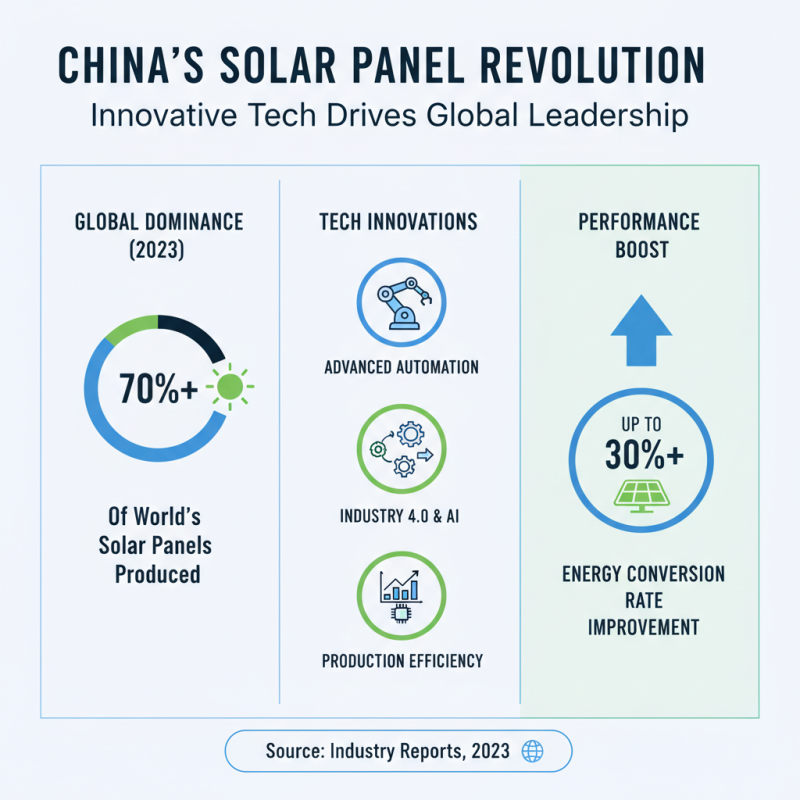
China has emerged as a leader in solar panel production, showcasing innovative technologies in its manufacturing processes. As of 2023, the country produces over 70% of the world’s solar panels, highlighting its significant influence on the renewable energy landscape. The integration of advanced automation, Industry 4.0 technologies, and artificial intelligence has revolutionized production efficiency. Companies now report improvements of up to 30% in energy conversion rates due to these innovations.
In solar cell production, techniques like bifacial technology enable panels to capture sunlight from both sides. This method can boost energy output by as much as 15%, making it increasingly attractive for large-scale projects. Additionally, advancements in thin-film solar technology have reduced material usage while maintaining performance. Yet, challenges persist in scaling these technologies sustainably. Issues related to waste management and resource sourcing need constant reflection and improvement.
Moreover, innovations in battery storage systems are crucial for maximizing solar energy utilization. Solid-state batteries offer higher energy density and longer lifecycle compared to traditional lithium-ion batteries. This evolution in battery technology can enhance the reliability and efficiency of solar energy systems. However, there are hurdles in manufacturing large-scale solid-state batteries. Addressing these challenges requires ongoing research and collaboration within the industry.
The Rise of Lithium-ion Battery Technology in China's Energy Storage Sector
China's energy storage sector is experiencing rapid growth, driven by lithium-ion battery technology. These batteries are lighter, more efficient, and have a longer lifespan than traditional storage solutions. They play a crucial role in solar energy systems, allowing excess power to be stored for later use. This is especially important in regions with intermittent sunlight.
The integration of lithium-ion batteries into solar energy systems demonstrates innovation and adaptability. However, challenges remain. Battery recycling and raw material sourcing raise environmental concerns. Continuous improvement is needed to enhance sustainability practices within the industry.
When considering energy storage options, think about efficiency and lifespan. A well-chosen battery system can significantly reduce energy costs over time. Regular maintenance is key to ensuring optimal performance. Stay informed about emerging technologies and advancements. This knowledge can help you make better decisions for your energy needs.
Impact of Government Policies on China's Solar Energy Innovations
Government policies play a crucial role in shaping solar energy innovations in China.
The commitment to renewable energy has led to significant investments. Grants and subsidies support research and development.
These financial incentives drive technology advancements.
However, not all policies yield positive results. Some regulations may hinder smaller companies from innovating.
These restrictions can create an uneven playing field. Larger companies often dominate the market, limiting diversity in innovation.
This trend raises questions about long-term sustainability. Are we sacrificing diversity for rapid growth?
China's solar market continues to evolve. Efforts to streamline permitting processes have emerged.
This simplification helps accelerate project timelines. At the same time, there are concerns over quality control.
Rapid expansion sometimes leads to overlooked standards. A balance between speed and quality is necessary for future success.
Integrating Solar and Battery Solutions for Enhanced Energy Efficiency in China
China's commitment to sustainable energy solutions has driven significant advancements in solar panel and battery technologies. The integration of these systems plays a crucial role in enhancing energy efficiency across various sectors. Recent reports indicate that China remains the world leader in solar energy production, with over 100 GW of new installations annually. The deployment of photovoltaic systems alongside battery storage can drastically reduce reliance on fossil fuels.
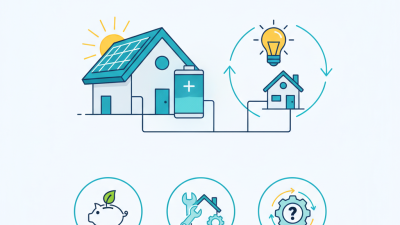
Integrating solar panels with battery storage enables households and businesses to optimize energy use. During the day, solar energy can be harnessed and stored for nighttime usage. This not only mitigates energy costs but also stabilizes the grid. According to a study by the International Energy Agency, widespread adoption of paired solar and battery systems could lower greenhouse gas emissions by up to 40% by 2030.
Tip: Evaluate local incentives for installing solar and battery systems. Many regions offer subsidies or tax credits, making it more affordable.
Despite the advancements, challenges persist. Battery recycling and production processes need improvement for sustainability. In addition, integrating these technologies into existing infrastructures can be complex and costly. As innovation continues, addressing these issues is vital for the future of energy efficiency in China.
Tip: Stay informed about advancements in battery technology. New developments can lead to increased efficiency and longevity of energy storage systems.