Top Tips for Choosing the Best Solar Kit with Battery?
Choosing the right solar kit with battery can be daunting. With numerous options on the market, how do you ensure quality and efficiency? Renowned solar energy expert, Dr. Emily Carter, emphasizes, "A well-selected solar kit can transform your energy consumption."
Solar kits with batteries provide sustainable energy solutions. They store excess energy for use during cloudy days or nighttime. This versatility is vital for homeowners, especially those looking for energy independence. Dr. Carter also notes, "It’s not just about the panels; the battery's efficiency matters too."
Understanding the needs of your home is crucial. Not every solar kit with battery suits every situation. Evaluate your energy usage. Consider factors like storage capacity and lifespan. Reflect on your choices, as they can lead to significant savings and a reduced carbon footprint. Make informed decisions, ensuring a reliable energy future for you and your family.

Understanding Solar Kits: Key Components and Functionality
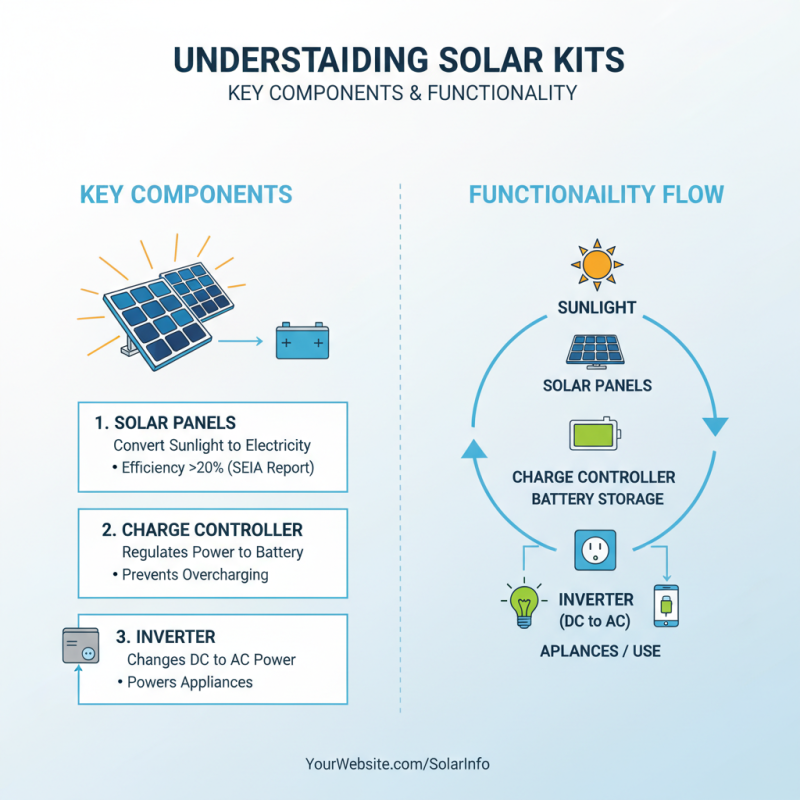
When exploring solar kits, understanding key components is essential. Solar panels are at the heart of any solar kit. They convert sunlight into electricity. According to a report from the Solar Energy Industries Association, the average efficiency of solar panels has increased to over 20%. This improvement means you can generate more power in a smaller space.
Another important component is the battery. A good battery stores surplus energy for later use. Lithium-ion batteries are the most popular choice. They offer a longer lifespan and better efficiency. Research indicates that they can last over 10 years. However, they can be more costly upfront. Reflecting on your energy needs is vital.
Inverters also play a critical role. They convert DC energy from solar panels into AC power for home use. Different inverters suit different setups, so it's crucial to choose wisely. A mismatched inverter can lead to inefficient energy use. Thus, considering your home’s energy consumption patterns is essential to make an informed decision. Balancing upfront costs with long-term savings will help you choose the right solar kit.
Assessing Your Power Needs: Calculating Energy Requirements
Assessing your power needs is crucial when choosing the best solar kit with a battery. Start by calculating your energy requirements. Identify all the appliances and devices you use daily. Take note of their power ratings, usually indicated in watts. This step ensures you invest in a kit that provides sufficient energy.
For instance, a refrigerator may consume around 200 to 700 watts. A home office setup can require about 300 watts for a computer and printer. Assessing these needs accurately might reveal gaps in your calculations. Are there appliances you forgot? Small devices add up quickly and can affect overall consumption.
Consider your energy usage patterns too. Do you need power overnight? A larger battery might be necessary. Also, reflect on seasonal changes. Longer days in summer mean more solar energy capture. In contrast, winter months can lower solar generation. Understanding these factors can guide you in selecting an optimal solar battery kit for your home. You want a balance between your energy needs and the kit’s capabilities.
Evaluating Battery Types: Choosing the Right Storage Solution
Choosing the right battery type for your solar kit is crucial. Lithium-ion and lead-acid are common options. Lithium-ion batteries offer high energy density and longer lifespan. Reports indicate these batteries can last 10 to 15 years, while lead-acid batteries typically last only 3 to 7 years.
Cost is another important factor. Lithium-ion batteries are more expensive upfront but save money over time. Studies show they have a higher return on investment due to lower replacement frequency. Lead-acid batteries might seem cheaper initially, but hidden costs can accumulate from more frequent replacements and maintenance.
Evaluate your energy needs and budget carefully. Battery capacity matters—measured in kilowatt-hours (kWh). Most households need between 5 to 15 kWh of storage. Are you prepared for outages? The right storage will ensure you have power during peak demand times. Think about your long-term energy goals and how your choice will impact them in the future. Consider consulting with a professional to help navigate these decisions.
Considering Installation and Maintenance: DIY vs. Professional Help
When choosing a solar kit with a battery, the installation method is crucial. You have two primary options: DIY or hiring professionals. DIY installation can save money. However, it requires a good understanding of electrical systems. Missteps can lead to performance issues or safety hazards. Many homeowners underestimate the complexity of wiring and positioning panels correctly.
On the other hand, professional installation offers expertise. Technicians can ensure everything is set up safely and efficiently. They provide network connections and help in choosing the right components. It’s important to weigh the upfront costs against long-term benefits. Sometimes, paying for professional help can lead to better energy efficiency.
Consider your comfort level with tools and technology. If you're handy, DIY might work well. In contrast, if you're unsure, professional installation is wise. Each approach has pros and cons that depend on your unique situation. Make sure to do thorough research and possibly consult experts before making a decision. Remember, your home’s energy future depends on it.
Comparison of DIY vs. Professional Solar Kit Installation and Maintenance Costs
Budgeting for Solar Kits: Cost Factors and Long-Term Savings
Budgeting for solar kits is essential for making informed decisions. The upfront costs of solar kits with batteries can range from $5,000 to $15,000. This wide range depends on the kit’s capacity and components. Researchers found that consumers often overlook ongoing savings. According to the U.S. Department of Energy, a solar energy system can save homeowners over $20,000 in energy costs over 20 years.
Long-term savings are influenced by installation quality and regional incentives. Some states offer tax credits or rebates that significantly reduce initial costs. However, not all installations are equal. A poorly installed system may require costly repairs, negating any savings. Consequently, investing in professional installation can prevent future expenses.
Battery storage can further affect costs. On average, adding a battery to a solar kit can increase expenses by 20%-30%. Still, this provides energy independence and security during outages. Balancing cost versus potential savings can be challenging. Future energy prices may rise, enhancing the value of your investment. Analyzing all factors ensures a well-rounded decision.