What Are the 2026 Top Solar Power Trends?
Solar power is entering 2026 with stronger technology, wider adoption, and harder questions. Prices have fallen, but installation quality still varies. A cheap panel does not guarantee reliable energy. Roof direction, local weather, grid limits, and maintenance remain important. Fatih Birol, Executive Director of the International Energy Agency, described solar PV as “the new king of electricity.” That statement captures the market’s momentum, but it does not tell the whole story.
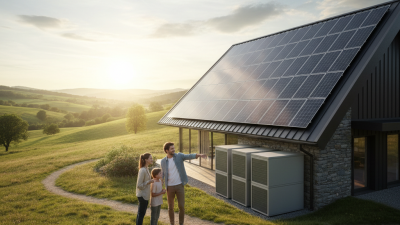
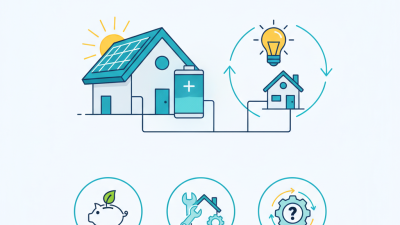
In 2026, high-efficiency panels will attract attention, especially tandem designs using silicon and perovskite materials. Battery storage will become more closely connected with residential and commercial systems. It can capture midday generation and release electricity after sunset. Smart inverters and software will also help manage unstable grid conditions. Artificial intelligence may improve forecasting, fault detection, and maintenance scheduling. Still, these tools are not magic. Poor data can produce poor decisions.
Distributed solar will remain important. More households, factories, farms, and public buildings may generate power near consumption points. Agrivoltaics could combine crops with elevated panels, although results differ by climate and crop type. Recycling will become a more visible industry issue as older modules reach retirement. Policy stability will matter as much as technical progress. The honest view is less dramatic. Solar power is expanding quickly, yet permitting delays, transmission shortages, and supply-chain pressure can slow projects. The best 2026 systems will combine efficient hardware, careful design, storage, and realistic local planning. Progress is real. It is not effortless.
Solar Power in 2026: An Overview of Emerging Industry Trends
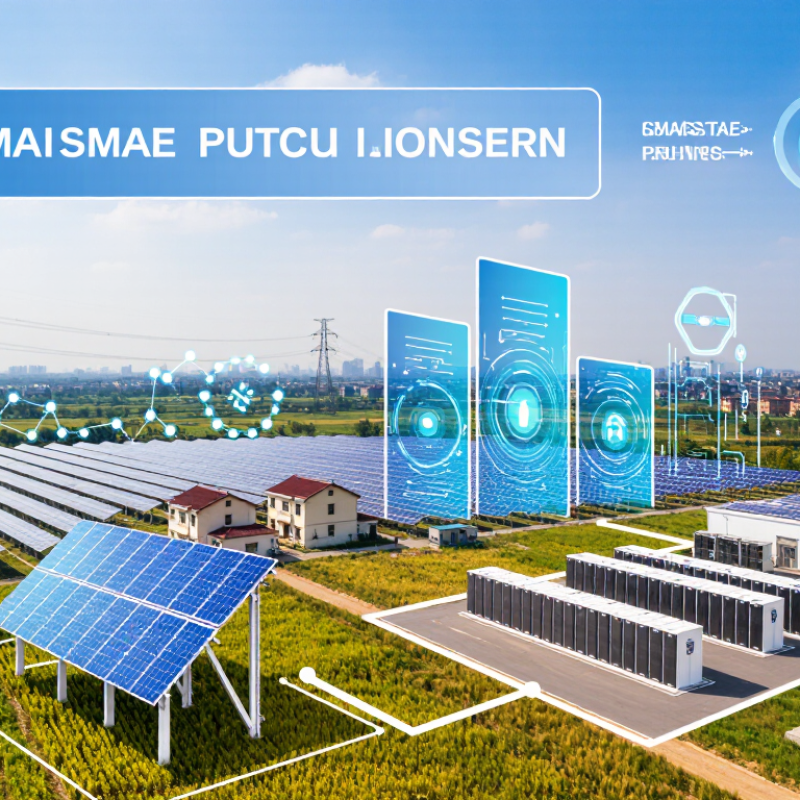
Solar power is becoming more than a rooftop technology. In 2026, developers are combining high-efficiency modules with batteries, smart inverters, and flexible grid controls. Bifacial panels can capture reflected light from bright surfaces, improving output in suitable locations. Tandem cells also attract attention because they layer different materials to absorb more sunlight. However, commercial reliability still needs long-term testing.
Storage is moving closer to the center of solar planning. Battery systems can shift midday electricity into evening demand, reducing pressure on local grids. Advanced inverters may support voltage stability during outages or sudden weather changes. These systems require careful sizing, fire protection, and transparent performance data. Bigger is not always better.
Solar projects are also entering working landscapes. Agrivoltaic designs place panels above crops, allowing farming and electricity generation to share land. Early results suggest possible benefits for shade-sensitive plants, but yields vary by climate and crop type. Recycling is gaining importance as older modules approach retirement. Manufacturers and installers will need clearer material records and practical recovery systems. Some forecasts may age badly. Costs, grid queues, mineral supply, and changing policies can reshape projects quickly. Reliable decisions will depend on measured field performance, independent testing, and honest reporting of failures.
What Are the 2026 Top Solar Power Trends?
Advances in solar cell efficiency are shifting from simple laboratory records to dependable outdoor performance. In 2026, n-type silicon designs will remain important because they reduce light-induced degradation and perform well in demanding climates. Tandem cells, which combine silicon with perovskite layers, may deliver higher efficiencies from the same roof area. However, long-term stability still needs stronger field evidence. Laboratory results are encouraging, but weather is less forgiving.
Material choices are also becoming more practical. Thinner wafers can reduce silicon use, while copper-based contacts may limit reliance on costly conductive materials. Recycled glass and aluminum are gaining attention because panels must create less waste at retirement. These changes sound straightforward. They are not. Recycling systems, material purity, and manufacturing energy can vary widely between regions.
Design improvements will make panels more adaptable. Bifacial modules can capture reflected light from pale roofs, gravel, or snow, while improved heat management helps maintain output during hot afternoons. Lightweight formats may suit older buildings, but lower weight can sometimes mean less structural strength. Careful engineering matters more than attractive specifications. Performance should be checked through independent testing, warranty data, and local climate records. Even then, predictions may miss dust, shading, or unusual storms. That uncertainty deserves attention.
Solar power is moving beyond daytime generation. In 2026, the stronger trend is coordinated solar, battery storage, and intelligent power management.
IRENA reported that global solar capacity reached about 1,419 gigawatts by the end of 2023. This scale creates a practical challenge: panels may produce their most electricity when demand is lower.
Storage helps shift that energy into evening hours. The IEA’s Batteries and Secure Energy Transitions report found that battery prices fell by about 90% between 2010 and 2023.
Lower costs support larger projects, but price alone does not guarantee reliability. A battery needs suitable duration, safe controls, and clear replacement planning. Four hours may help evening peaks, yet it may not cover several cloudy days.
Smart power systems add another layer. Digital forecasting can combine weather data, household demand, battery levels, and grid conditions. Flexible loads, such as water heating or vehicle charging, can respond when solar output changes. The IEA expects renewables to supply a larger share of global electricity this decade, increasing the value of accurate forecasting and responsive networks.
The lesson is not simple. More software can also create new failure points. Poor data, weak cybersecurity, or rushed controls may reduce trust. Project developers should test systems under heat, storms, outages, and sudden demand changes. Real performance matters more than impressive specifications. That assumption can fail.
What Are the 2026 Top Solar Power Trends?
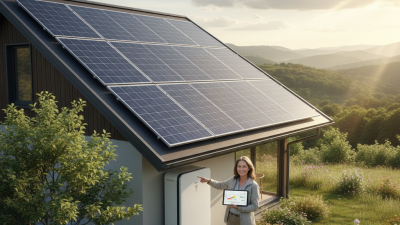
Solar expansion is moving in three directions: distributed, utility-scale, and floating projects. The International Energy Agency reported roughly 420 GW of new solar capacity in 2023. Its Renewables 2024 report expects solar to provide nearly 80% of renewable capacity growth through 2030. By 2026, rooftops may become more valuable for local resilience, especially when paired with batteries and smart inverters. A small commercial roof can reduce daytime grid demand, but weak wiring and limited storage still create practical bottlenecks.
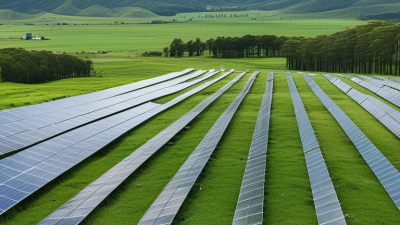
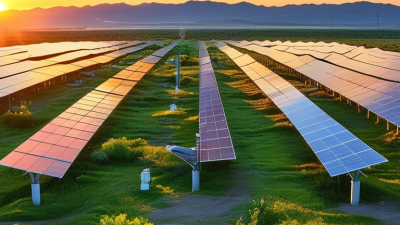
Utility-scale projects will remain the volume leader. Large sites can use single-axis trackers, high-voltage substations, and shared transmission corridors. The IRENA Renewable Capacity Statistics 2025 recorded global solar capacity above 1.8 terawatts at the end of 2024. However, capacity is not the same as dependable electricity. Grid queues, land conflicts, curtailment, and transformer shortages may slow projects that look attractive on paper.
Floating solar is also expanding across reservoirs, irrigation ponds, and former industrial water sites. The World Bank has identified floating PV as a useful option where land is scarce, although ecological effects require careful monitoring. Cooler water can improve panel performance, yet anchors, storms, evaporation changes, and maintenance access remain unresolved. The outlook is strong. It is not effortless. Forecasts may also overestimate deployment when permitting and grid upgrades lag behind construction.
Solar power growth in 2026 will depend on more than falling panel prices. Policy decisions will shape project speed, financing, and public confidence. Governments are refining clean-energy incentives, grid rules, and domestic manufacturing support. Clear permitting remains essential. Delays can leave large projects waiting beside finished equipment.
Market demand is also changing. Developers increasingly pair solar farms with batteries to manage evening peaks and unstable weather. Commercial buyers want predictable electricity costs, while households seek backup power during outages. However, interest rates, transformer shortages, and crowded grid connections can weaken otherwise strong projects. The picture is not perfectly clean. More solar can reduce emissions, but land use, mining, water consumption, and panel disposal require honest measurement. Recycling systems are improving, yet they are not equally available everywhere. Extreme heat can also reduce panel performance, a detail that planning models sometimes underestimate.
Tips: Compare policies, connection timelines, and total project costs before investing. Ask how equipment will be maintained and recycled. Check local sunlight, flood exposure, and wildfire risk. Do not judge a project by capacity alone. A smaller installation near demand may create greater value than a distant, oversized farm. I may be too cautious, but transparent data should matter more than impressive forecasts.
| Trend Area | Key Indicator | Verified Baseline | 2026 Direction or Outlook | Growth Implication | Reference |
|---|---|---|---|---|---|
| Global Deployment | Annual solar photovoltaic additions | Approximately 452 GW was added globally in 2024. | Annual additions are expected to remain at a historically high level as solar continues to provide the largest share of new renewable capacity. | Solar is likely to remain the fastest route for adding new low-carbon electricity capacity. | IRENA, Renewable Capacity Statistics 2025 |
| 2030 Policy Alignment | Global renewable-energy expansion target | Countries agreed at COP28 to work toward tripling global renewable-energy capacity by 2030 and doubling the annual rate of energy-efficiency improvement. | Solar policy is expected to focus on permitting, grid access, auctions, tax support, and faster project execution. | Clearer policies can reduce development delays and improve investment certainty. | COP28 Global Stocktake and UAE Consensus |
| Regional Policy | European renewable-energy target | The European Union has a legally binding target of at least 42.5% renewable energy in final energy consumption by 2030, with an aspiration to reach 45%. | Solar deployment is expected to be supported by accelerated permitting, rooftop requirements, and national implementation plans. | Policy implementation, rather than target-setting alone, will become a major determinant of project timing. | European Union Renewable Energy Directive |
| Grid Integration | Grid investment and connection capacity | The International Energy Agency estimates that global annual grid investment needs to rise from about USD 400 billion today to more than USD 600 billion by 2030 to meet clean-energy goals. | Transmission upgrades, distribution automation, flexible demand, and faster interconnection studies are expected to become central solar priorities. | Grid constraints may limit solar growth even when generation projects are financially competitive. | IEA, Electricity Grids and Secure Energy Transitions |
| Solar Plus Storage | Battery storage deployment | Global installed battery-storage capacity was about 85 GW in 2023, according to the IEA. | Co-located solar and batteries are expected to expand, particularly where midday solar production creates curtailment or low wholesale prices. | Storage can shift solar output into evening demand periods and improve grid reliability. | IEA, Batteries and Secure Energy Transitions |
| Distributed Solar | Rooftop and behind-the-meter generation | Distributed solar reduces transmission losses and can provide electricity close to demand, although its economics depend on local tariffs and support mechanisms. | Virtual power plants, smart inverters, time-of-use tariffs, and household batteries are expected to gain importance. | Consumers may increasingly participate in electricity markets through flexible, networked energy assets. | IEA, Renewables 2024 |
| Project Economics | Solar electricity cost competitiveness | IRENA reported a global weighted-average levelized cost of electricity of approximately USD 0.043 per kWh for utility-scale solar PV commissioned in 2023. | Financing costs, grid connection expenses, land, labor, and permitting are expected to have a greater influence on total project economics. | Lower equipment prices do not automatically translate into lower delivered electricity costs. | IRENA, Renewable Power Generation Costs in 2023 |
| Manufacturing Resilience | Supply-chain diversification | Solar manufacturing capacity has expanded faster than global deployment, creating periods of oversupply and price pressure. | Governments are expected to emphasize domestic or regional manufacturing, traceability, critical minerals, and supply-chain resilience. | Procurement decisions may increasingly consider origin, labor standards, carbon intensity, and delivery security. | IEA, Renewables 2024 |
| Lifecycle Emissions | Solar power carbon intensity | The IPCC reports a median lifecycle greenhouse-gas intensity of approximately 48 g CO₂-equivalent per kWh for utility-scale solar PV, far below fossil-fuel generation. | Manufacturing energy sources, material efficiency, recycling, and module lifetime are expected to receive more attention. | Environmental performance will increasingly be assessed across the full lifecycle rather than only during operation. | IPCC, AR5 Working Group III |
| Land and Biodiversity | Siting and land-use management | Large solar projects can create land-use conflicts involving agriculture, habitats, landscapes, and local communities. | Agrivoltaics, brownfield development, rooftop systems, biodiversity plans, and community engagement are expected to become more common. | Better siting can reduce permitting risk and improve public acceptance. | IEA, Renewables 2024; IRENA, Renewable Energy and Land-Use Planning |
| Circular Economy | End-of-life solar modules | Most installed solar modules are still operating, but large-scale end-of-life volumes are expected to increase as early installations reach retirement. | Recycling standards, take-back systems, repair, reuse, and recovery of glass, aluminum, silicon, and other materials are expected to expand. | Circular design can reduce waste, improve resource security, and strengthen the environmental case for solar power. | IRENA and IEA-PVPS, End-of-Life Management: Solar Photovoltaic Panels |
| Climate Resilience | Weather and climate exposure | Solar assets can be affected by heat, hail, wildfire smoke, flooding, hurricanes, drought, and changing irradiation patterns. | Project design is expected to place greater emphasis on climate-risk screening, stronger mounting systems, improved forecasting, and insurance requirements. | Resilient design can protect generation, lower downtime, and preserve long-term project value. | IPCC, AR6; IEA, Renewables 2024 |
Note: Baseline figures are historical or published estimates. The 2026 column describes expected market direction rather than a guaranteed forecast.