Top Solar Panel Inverter Manufacturers in China

Solar power’s rapid expansion has made inverter selection a critical part of project design. SolarPower Europe’s Global Market Outlook 2024–2028 estimates that the world installed 447 GW of new solar capacity in 2023. IEA PVPS likewise reports that cumulative global photovoltaic capacity passed 1.6 TW. Behind each array, a solar panel inverter converts direct current into usable alternating current and helps manage system performance. The choice affects more than headline efficiency. It can shape monitoring, maintenance, and long-term operating costs.

China is home to many inverter manufacturers serving residential, commercial, and utility-scale projects. Their products vary in power range, grid-support features, cooling design, software, and after-sales coverage. A rooftop installer may prioritize compact dimensions and clear monitoring; a utility developer may focus on service access and fleet-level controls. Numbers matter. Yet datasheet efficiency alone cannot show how a unit performs through heat, dust, or years of changing grid conditions.

This guide introduces leading manufacturers and the factors buyers can compare, including product range, certifications, warranty terms, and service availability. It draws on published company information and industry reports, but rankings should not be treated as universal verdicts. Markets differ, and public data can lag actual shipments. That limitation deserves attention. A careful shortlist starts with the project’s location, operating conditions, and support needs—not just a brand name.
Top Solar Panel Inverter Manufacturers in China

China’s Solar Inverter Manufacturing Industry Overview

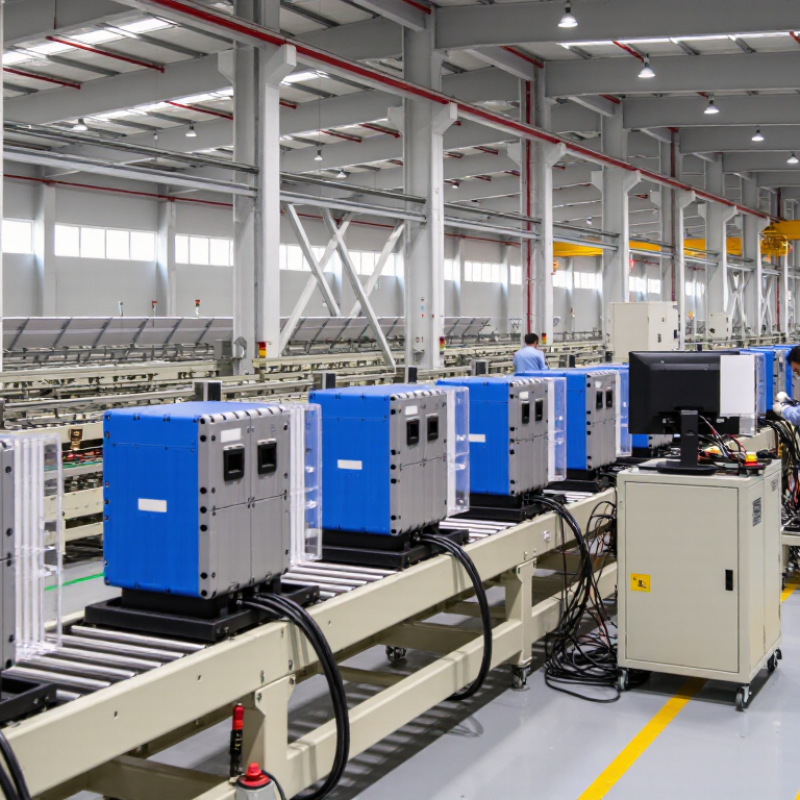
China’s solar inverter industry has grown alongside the country’s large photovoltaic supply chain. Manufacturing clusters bring together power electronics, circuit boards, metal enclosures, and thermal-management components. This proximity can shorten sourcing cycles and support production at different scales. The picture is not uniform. Factory capabilities, quality systems, and product ranges vary.

Inverter production combines automated assembly with careful engineering work. Technicians may inspect solder joints, tighten enclosure seals, and verify electrical performance before units leave the line. Testing commonly covers conversion efficiency, temperature response, and operation under changing loads. Field conditions still matter. Heat, dust, and unstable grid conditions can expose weaknesses that laboratory checks miss.

Chinese manufacturers serve residential, commercial, and utility-scale projects, with products designed for different system layouts. Export-oriented firms also adapt documentation and communication to varied markets. Buyers should look beyond quoted capacity and compare warranty terms, service access, monitoring functions, and independent test records. These details are less visible than a product label. They deserve attention. Rapid product development is an advantage, though frequent revisions can make long-term support harder to assess. Clear version records and realistic performance data help close that gap.

Key Types of Solar Panel Inverters Produced in China

Key Types of Solar Panel Inverters Produced in China

Chinese manufacturers produce several inverter types for different project sizes and operating conditions. String inverters connect groups of panels, or strings, to a shared unit. They are common on rooftops and commercial sites because installers can monitor separate strings and isolate faults more easily. Central inverters serve larger solar plants, combining power from many panel arrays. Their scale can simplify plant-level equipment, but a fault may affect a broader section.

Small details matter: shade from a vent can reduce output across a string, depending on its design.

Microinverters attach to individual panels, allowing panel-level conversion and monitoring. They can suit complex roofs, though they add equipment at each module. Hybrid inverters manage solar generation alongside battery storage, making them useful where energy shifting or backup is required. Not every system needs a battery.

The IEA PVPS report Snapshot of Global PV Markets 2024 estimates that global photovoltaic capacity reached about 1.6 terawatts by the end of 2023, underscoring the scale of deployment these technologies serve. That figure describes PV capacity, not inverter shipments.

Buyers should compare efficiency, temperature range, monitoring functions, and service access against the project’s actual conditions.

One uncomfortable truth: the “best” inverter type can change when a roof gains shade or storage needs grow.

Leading Chinese Solar Inverter Manufacturers and Their Strengths

Top Solar Panel Inverter Manufacturers in China

Leading Chinese Solar Inverter Manufacturers and Their Strengths

China’s inverter manufacturers benefit from a vast domestic solar market. IEA PVPS reported that China installed about 235 GW of photovoltaic capacity in 2023, out of roughly 447 GW added worldwide. That scale supports production experience, supplier networks, and rapid product iteration. For buyers, the practical strengths to assess include conversion efficiency, thermal management, monitoring, and service availability—not factory output alone. A unit may look excellent on a specification sheet. Field support matters just as much.

Leading manufacturers commonly offer string inverters for rooftop and commercial systems, alongside central inverters for large solar farms. Some also integrate battery interfaces and grid-support functions, useful where projects need flexible storage or stable power output. Compare tested efficiency and operating limits under heat, dust, and partial shading. Check warranty terms, replacement-part access, and the quality of remote fault diagnostics. IEA PVPS’s Trends in Photovoltaic Applications 2024 documents the market’s rapid expansion, but high deployment figures do not prove every product performs equally. That distinction is easy to miss. Inverter selection still depends on site conditions, installer skill, and long-term service capacity.

Top Solar Panel Inverter Manufacturers in China - Leading Chinese Solar Inverter Manufacturers and Their Strengths

The table summarizes common product categories and capabilities offered by manufacturers serving the Chinese solar inverter market. Figures are indicative industry ranges, not specifications for any individual company or product.

Manufacturer Category Typical Inverter Segment Common Rated Power Range Typical Conversion Efficiency Common Design Strengths Typical Applications
Residential inverter specialists Single-phase string and hybrid inverters Approximately 1–10 kW Often around 97–98.5% maximum efficiency, depending on model Compact designs, multiple MPPT options, residential monitoring, and optional battery integration Homes and small rooftop systems
Commercial and industrial inverter makers Three-phase string inverters Approximately 10–125 kW Often around 98–99% maximum efficiency, depending on model Flexible array design, several MPPT inputs, remote performance monitoring, and grid-support functions Factories, warehouses, commercial rooftops, and distributed generation
Utility-scale inverter suppliers High-power string and central inverters From roughly 100 kW per unit to multi-megawatt central systems Often around 98–99% maximum efficiency, with model-specific variation High power density, plant-level controls, grid-code functions, and large-project monitoring support Ground-mounted solar farms and large-scale power plants
Hybrid and storage inverter makers Hybrid inverters combining solar, battery, and grid connections Commonly around 3–20 kW for residential models; larger commercial systems are also available Varies by operating mode and model; check the product datasheet for PV and battery conversion figures Energy-management controls, battery compatibility, backup-power options, and time-of-use operation Solar-plus-storage homes and commercial sites
Export-oriented inverter manufacturers String, hybrid, and utility inverter portfolios for multiple markets Depends on product range; may span residential through utility-scale applications Model- and market-specific; compare certified datasheets rather than portfolio-wide estimates Regional grid compliance, multilingual monitoring platforms, and market-specific product variants Domestic and international residential, commercial, and utility projects

Specifications vary by model, region, and test standard. Verify rated power, efficiency, MPPT configuration, protection ratings, certifications, and warranty terms against the relevant product datasheet.

Quality, Technology, and Certification Standards to Compare

Top Solar Panel Inverter Manufacturers in China: Quality, Technology, and Certification Standards to Compare

Comparing inverter manufacturers takes more than scanning efficiency figures. Check how those figures were measured, including test conditions and operating temperature. A high peak-efficiency number may not reflect performance during hot afternoons or partial shading. Ask for independent test reports and inspect the warranty terms, service period, and exclusions. Small details matter. In a project, a vague replacement clause can become a costly delay.

Technology should match the installation, not just the sales brochure. Review monitoring functions, grid-support settings, protection features, and compatibility with the planned solar array. Request clear documentation for fault codes and firmware updates. Certifications are another useful checkpoint: verify that certificates apply to the exact inverter model and target market, rather than a related product. Standards can differ by destination. When comparing factories, assess quality-control records, component traceability, and how sample units are tested before shipment. No checklist removes risk entirely; paperwork can look tidy while field support remains uneven.

Tips: Ask for a sample certificate and confirm its model number. Compare warranty coverage line by line. Request references for installations with similar climate and system size. If a specification is unclear, get the answer in writing. One imperfect habit is trusting a polished presentation too quickly; pause, verify, and keep a record of what was promised.

How to Choose a Suitable Chinese Solar Inverter Manufacturer

Choosing a suitable Chinese solar inverter manufacturer requires more than comparing prices. Check the factory’s production capacity, testing equipment, and quality control records. A reliable supplier should provide clear datasheets, verified efficiency figures, and grid-compliance certificates for your target market. Ask whether the inverter supports the required voltage range, MPPT channels, monitoring systems, and battery configuration.

Request a sample unit before placing a large order. Test it under changing sunlight, high temperatures, and unstable grid conditions. Inspect connector quality, cooling design, noise levels, and firmware response.

Warranty terms also deserve careful attention. Confirm the warranty period, replacement process, spare-parts location, and technical response time. A polished brochure may still hide weak after-sales support. That risk is easy to underestimate.

Tips: Visit the factory, physically or through a live video tour. Ask for recent project references with similar climate and system size. Compare certification documents with the actual model number. Keep all technical promises in the contract. Do not choose the cheapest option automatically; however, a higher price does not guarantee better performance. My own judgment can be wrong when based on sales presentations alone, so independent testing and written evidence matter.