Top Tips for Solar Panel Install Success and Savings?
Installing solar panels can be a rewarding venture. However, it requires careful planning and execution. Many homeowners seek to maximize savings and efficiency with their solar panel install. Understanding the intricacies involved is crucial.
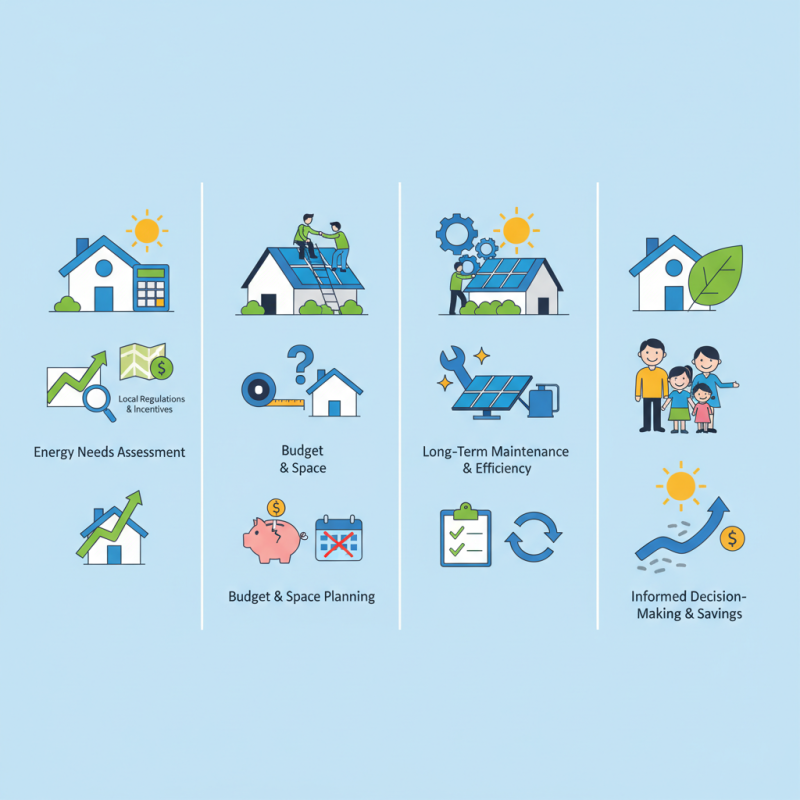
Research is a key step. Often, people overlook the importance of evaluating their energy needs. Each home's requirements differ. This impacts the size and type of solar system you choose. Additionally, checking local regulations and incentives can lead to significant savings.
Unforeseen challenges can arise during installation. Miscalculations in space or budget may lead to frustration. Many overlook the long-term benefits of proper maintenance. A successful solar panel install isn't just about getting the panels up; it's about ensuring they work effectively for years. Reflection on these aspects can lead to better decision-making in the solar journey.
Choosing the Right Solar Panels for Your Needs
Choosing the right solar panels is crucial for maximizing your investment. Each panel has different efficiencies, capacities, and prices. It can be overwhelming. Start by determining your energy needs. Calculate your average monthly usage. This will help you identify the right capacity for your home.
Tips: Look for panels with a good balance of efficiency and cost. Higher efficiency means more energy production in limited space. However, they often come with a higher price tag. Remember, you might not need the most expensive option. Sometimes, average panels suit smaller homes just fine.
Additionally, consider the warranty and lifespan of the panels. Some panels may look appealing but might not last long. Reflect on how long you plan to stay at your current home. If you'll move soon, invest cautiously. Research the installation process too. Poor installation can lead to reduced performance. Be proactive about these details; it prevents regret later.
Top Tips for Solar Panel Install Success and Savings
Understanding Installation Processes and Requirements
When planning to install solar panels, understanding the installation process is crucial. It starts with assessing your property. A professional evaluation of your roof's angle and strength is essential. Your location also matters. Different regions receive varying amounts of sunlight. This discrepancy affects the amount of energy you can generate. Be prepared for some surprises. You might face unexpected costs during the installation.
Permits and regulations can complicate things. Each area has different rules. These may require adjustments to your plans. Sometimes, these requirements are unclear, leading to confusion. Be sure to conduct thorough research. Knowing what permits are needed can save you time and stress. Identifying any potential roadblocks early can prevent delays.
Once the installation begins, stay engaged in the process. Communication with installers is key. Observe the work, and don't hesitate to ask questions. This hands-on approach helps you learn. It may reveal areas for improvement. After installation, ensure proper maintenance is in place. A lack of attention can diminish your system's efficiency over time.
Top Tips for Solar Panel Install Success and Savings
| Tip |
Description |
Savings Potential |
Installation Process |
| Research Installation Companies |
Look for reputable solar panel installers with good reviews. |
10-30% off installation costs with competitive quotes. |
Check credentials and request multiple quotes. |
| Understand Your Energy Needs |
Calculate your average energy consumption to size your system appropriately. |
Improved efficiency leading to 15-20% more savings. |
Conduct an energy audit if necessary. |
| Explore Financing Options |
Look for loans, grants, and tax incentives to offset costs. |
Save up to 50% with rebates and tax credits. |
Review terms and conditions of financing offers. |
| Choose the Right Location |
Install panels in areas with maximum sunlight exposure. |
Up to 30% higher energy production. |
Assess roof orientation and shading issues. |
| Regular Maintenance |
Schedule cleanings and inspections to keep systems efficient. |
Prevent up to 20% loss in energy production. |
Follow the manufacturer's maintenance recommendations. |
Exploring Financial Incentives and Rebates for Solar Energy
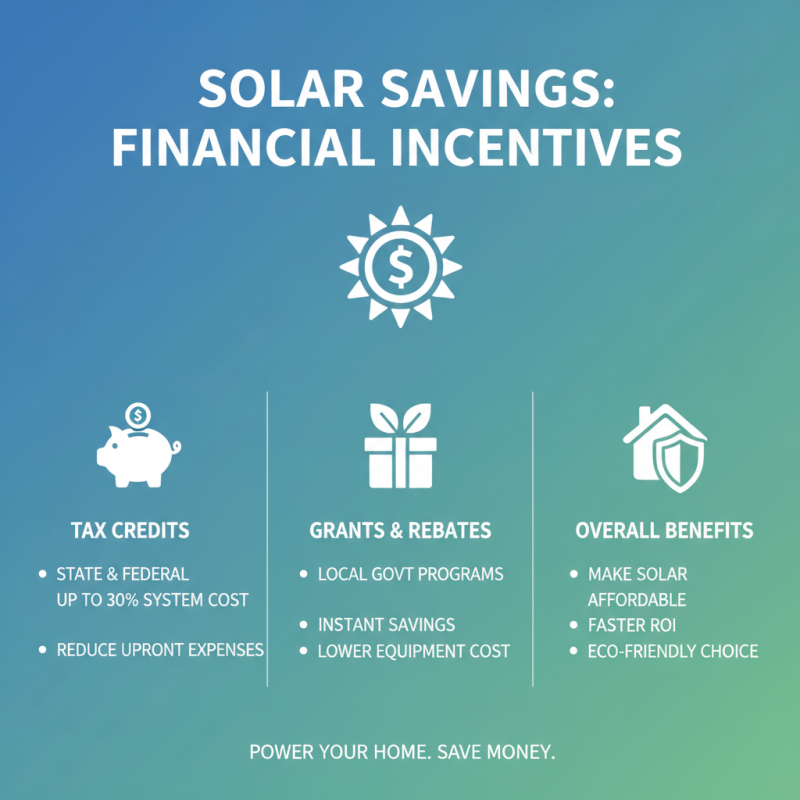
When considering solar energy, financial incentives greatly enhance the appeal. Numerous states offer tax credits for solar panel installation, reducing upfront costs. Some programs can cover up to 30% of the system price. Grants and rebates from local governments also contribute to savings. Many homeowners find this support crucial for their decisions.
Additionally, net metering allows for excess energy to be sold back to the grid. This feature can lower monthly utility bills significantly. It's important to check local regulations, as they can vary widely. However, navigating these options can be tricky. Some might miss out on essential rebates due to oversight or misinformation.
Yet, some homeowners find the application processes daunting. Confusion over paperwork can lead to unclaimed benefits. Engaging with knowledgeable professionals can help clarify options. Ultimately, taking time to understand available incentives can lead to substantial savings in the long run.
Effective Maintenance Tips for Long-lasting Solar Panels
Maintaining solar panels is crucial for long-term efficiency.
Regular cleaning can enhance performance by up to 25%.
Dust, leaves, and bird droppings can reduce energy output. A simple rinse with water often does the trick.
Monitoring your system performance is essential. Use a solar monitoring app to track energy production.
Research shows that systems without monitoring can underperform by 10% or more.
Address issues immediately to avoid costly repairs later.
Inverter checks are just as vital. These devices convert solar energy into usable power.
A malfunctioning inverter can halt energy generation. Schedule professional inspections every few years.
This practice can extend the lifespan of your entire solar setup.
Remember, solar panels can last over 25 years, but only with proper care.
Evaluating Energy Savings and Return on Investment
When considering solar panel installation, understanding energy savings is crucial. Many homeowners find that assessing their energy consumption can help project future savings. Calculate your average monthly bill before installing solar. This data can act as a baseline.
Evaluate your return on investment (ROI). You can do this by comparing solar costs with your estimated energy savings. Research shows that installing solar can lead to significant long-term savings. However, don't ignore the initial expenses and financing options. They can affect your overall return.
Tips for success include sourcing multiple quotes from installers. Don’t settle for the first estimate. It's helpful to compare warranties, equipment quality, and installation processes. Another tip is to consider local incentives. These often exist and can reduce upfront costs significantly. Reflect on the potential challenges, like unexpected maintenance. It's wise to prepare for such scenarios.