How to Choose the Right EV Charger Wall Plug for Your Home?
Choosing the right Ev Charger Wall Plug is crucial for electric vehicle owners. According to Emily Green, an industry expert, "The right charger makes all the difference in your EV experience." This statement highlights the importance of selecting a suitable plug to maximize efficiency and convenience.
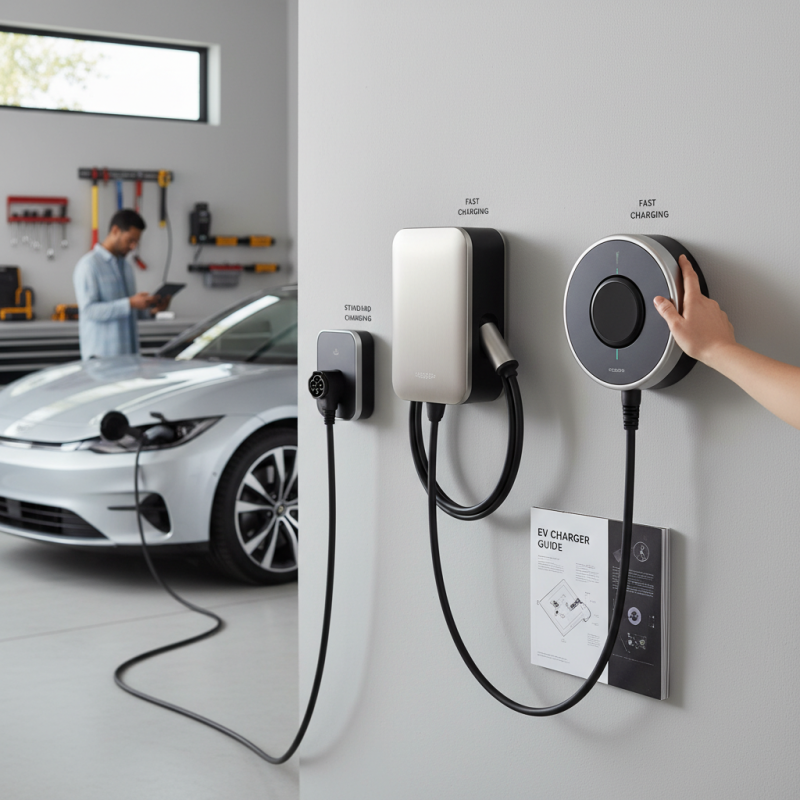
With various options available, understanding your needs is vital. Do you require fast charging or standard charging? Will you be using the charger daily or occasionally? These questions can guide your choice. An appropriate EV Charger Wall Plug not only ensures compatibility with your vehicle but also enhances charging speed and safety.
However, not every charger meets quality standards. Poor choices can lead to frustrating experiences. It is essential to research brands and read reviews. Remember, a subpar charger may cost less but can lead to higher long-term expenses. Making an informed decision will ultimately benefit both your wallet and your electric vehicle's performance.
Understanding Different Types of EV Chargers Available for Home Use
When considering an EV charger for your home, it’s essential to understand the different types available. Level 1 chargers use a standard household outlet. They are easy to install and cost-effective. However, their charging speed is quite slow. You might find it sufficient for overnight charging, but it can be frustrating if you need a quick charge.
Level 2 chargers offer a more robust solution. They require a dedicated 240-volt outlet, making installation slightly more complex. These chargers can recharge your vehicle in just a few hours. It’s a great choice for daily use, especially if you drive frequently. However, the installation costs can create budget concerns.
Fast chargers, often found in public spaces, are also an option. They can significantly reduce charging time. Yet, their installation at home might not be practical due to the high costs and space requirements. Many also overlook the importance of checking the power output of the charger. A mismatch can lead to slower charging than expected. Careful consideration of your driving habits and home setup is necessary for the best outcome.
Key Factors to Consider When Choosing an EV Charger Wall Plug
Choosing the right EV charger wall plug for your home is essential. Consider the charging speed you need. A Level 2 charger typically provides faster charging than a Level 1. This can be crucial if you have a longer commute. Think about your vehicle’s battery capacity as well. Different vehicles will require different levels of power.
Next, evaluate the installation location. Make sure the area is easily accessible. The wall plug should be close to where you park your EV. Ensure there are no obstructions that could hinder usage. Safety features are also significant. Look for chargers with built-in protections against overheating and electrical surges.
Lastly, reflect on the cost. A higher price tag doesn’t always mean better performance. Research various options. Read reviews and ratings. Make lists of pros and cons. Don’t rush the decision; it’s a significant investment.
Evaluating Charging Speed: Level 1 vs. Level 2 Chargers
When choosing an EV charger for home use, the charging speed is a crucial factor. Level 1 chargers typically use a standard 120V outlet. They deliver about 4-5 miles of range per hour. This can be fine for overnight charging, but it’s slow. According to a report from the U.S. Department of Energy, most EV drivers prefer faster options, especially those with longer commutes.
Level 2 chargers, however, provide a significant boost. Operating on 240V, they can add 10-60 miles of range per hour. Some models even reach up to 80 amps. This speed can meet the demands of daily charging needs. Research shows that homes equipped with Level 2 chargers are more convenient for owners. However, installation may require electrical upgrades, which can be costly and time-consuming.
There’s a clear trade-off between speed and cost. People might hesitate over initial expenses, yet the long-term benefits are substantial. Choosing the right charger is not just about range; it’s also about lifestyle choices. Assessing daily travel habits can help make an informed decision.
Charging Speed Comparison: Level 1 vs. Level 2 EV Chargers
Assessing Your Home's Electrical Capacity for EV Charger Installation
When considering an installation for an electric vehicle (EV) charger, assessing your home's electrical capacity is crucial. Many homes can handle a level 1 charger, which uses a standard household outlet. However, for faster charging, a level 2 charger requires more power. This often demands an upgrade to your electrical system.
According to the U.S. Department of Energy, a level 2 charger can provide up to 25 miles of range per hour. This is significant for daily commutes. Checking your electrical panel is a vital step. If it has room for additional circuits, you may be in good shape. But older homes could struggle with these demands.
Tip: Always consult a licensed electrician. They can evaluate your wiring and power supply. You might discover that your home needs a service upgrade. It can be costly, but it ensures safety.
Another point to consider is the location of the charger. Proximity to your home's electrical panel can reduce installation complexity. If the panel is far, installation can become challenging and expensive. So, think about where you park your EV.
Tip: Analyze the existing wiring. You might find issues that need attention. Addressing these now can save bigger problems later.
How to Choose the Right EV Charger Wall Plug for Your Home?
| Dimension | Details |
| Home Electrical Capacity | 100 Amp, 200 Amp |
| Charger Level | Level 1 (120V), Level 2 (240V), DC Fast Charging |
| Charger Power Output | 3.3 kW (Level 1), 7.2 kW (Level 2), 50 kW+ (DC Fast) |
| Charging Time | 8-20 hours (Level 1), 4-8 hours (Level 2), 30-60 mins (DC Fast) |
| Installation Considerations | Wall space, distance from the EV parking |
| Cost Range | $300 - $2,000 (depending on level and installation) |
Cost Considerations and Installation Options for EV Chargers
When considering an EV charger for your home, cost plays a significant role. Charging stations vary widely in price based on features and power levels. Basic models can cost a few hundred dollars, while advanced options may reach over a thousand. Installation can add to the overall expense, influenced by your electrical system's compatibility. Evaluate whether your home needs an upgrade, which could increase the total cost.
Installation options are crucial too. You could opt for a professional installation or a DIY approach if you're handy. Professional help ensures safety and compliance with local codes, but it also comes with fees. Think about potential electrical work needed for higher-voltage chargers. Additionally, placement matters. A spot near your parking area simplifies daily use but may limit aesthetic choices. Some people find their chargers obstruct views or take up precious space.
Reflecting on your needs is essential. Not everyone requires the fastest charging option. For some, a slower charger suffices. Consider your daily driving habits. Choosing the right balance can save you money and hassle in the long run.
