
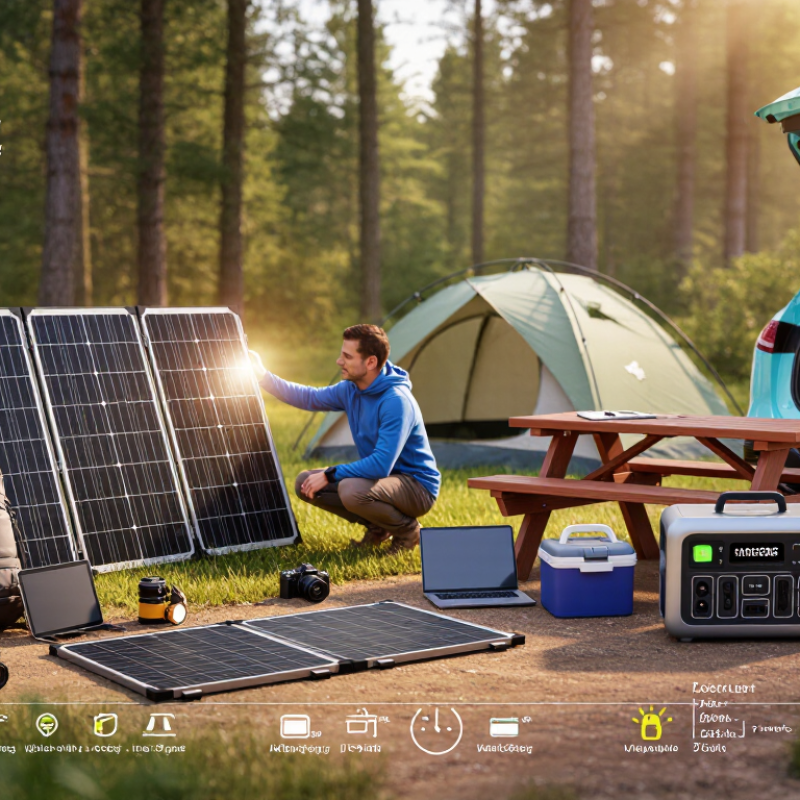
How to Choose Portable Solar Panels for Camping
Weather resistance matters more than a panel’s advertised wattage. During camping trips, sudden rain and damp grass can expose weak seams quickly. Look for a clear IP rating, sealed connectors, reinforced corners, and durable cable covers. Water resistance does not mean unlimited waterproofing. Keep the panel elevated, avoid puddles, and dry it fully before folding. I once packed a panel while its fabric was still damp. That shortcut created an unpleasant odor and may have shortened its life.
Connections must match your charging equipment. Check the panel’s voltage, current, connector type, and polarity before buying. A loose plug can interrupt charging when wind moves the cable. Some panels include USB outputs, while others require a compatible charge controller or power station. Never assume two connectors are electrically suitable because they physically fit. Read the technical label and the equipment manual. Device compatibility also depends on sunlight, battery limits, and charging protocols. A phone may charge slowly under thin clouds. Larger devices can require steadier power than a small folding panel provides.