How to Choose the Best RV Solar Kit for Your Travel Needs?
Choosing the right RV solar kit can greatly enhance your camping experience. In recent studies, over 70% of RV owners prefer solar power systems for their sustainability and reliability. According to solar energy expert Sarah Johnson, “The ideal RV solar kit should balance efficiency with ease of use.” This underscores the importance of understanding your specific travel needs.
When selecting an RV solar kit, consider factors like your energy consumption and available roof space. Many kits vary dramatically in capacity, and not all will meet your needs. A common mistake is underestimating power requirements. Imagine being off-grid, only to discover your solar system can’t keep up. It’s a frustrating scenario that many new RV users face.
Additionally, installation can be challenging. Some kits require advanced skills, while others are user-friendly. Understand the installation process before purchasing. The right RV solar kit should simplify your travels, not complicate them. Every detail matters. Balance cost with quality to make an informed choice. Your adventures deserve a reliable solution.

Understanding Your RV Power Needs for Solar Solutions
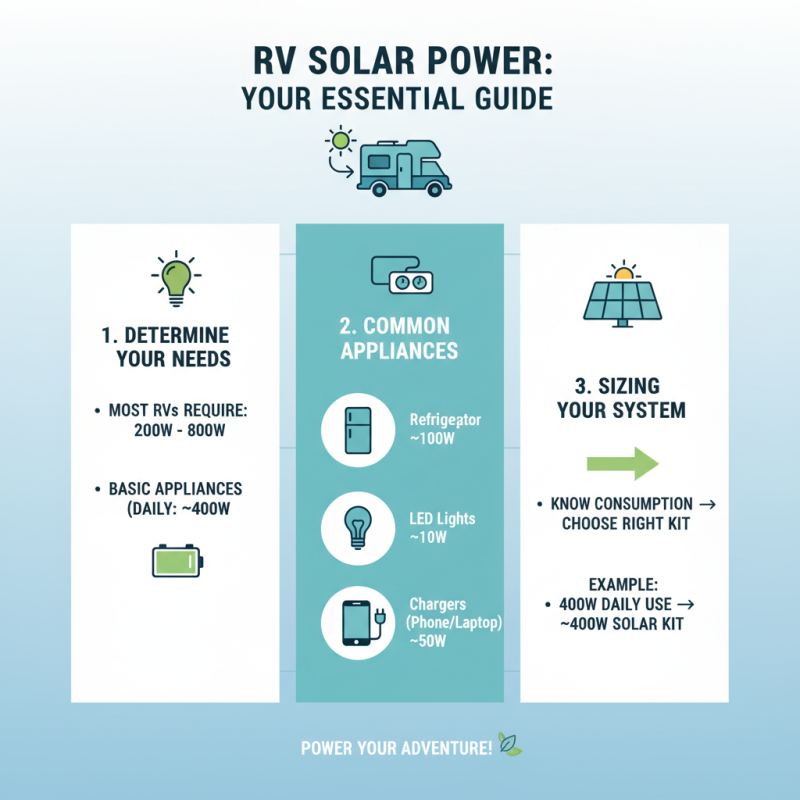
Understanding your RV's power needs is crucial for selecting the right solar kit. Most RVs require between 200 to 800 watts to run basic appliances. A refrigerator, lights, and chargers typically consume around 400 watts daily. Knowing your power consumption will help in sizing the solar system effectively.
Consider the ideal solar panel output as well. On average, one solar panel can produce about 300 watts per day. In optimal conditions, it takes about 3-4 panels to meet an average RV's needs. If you plan to use power-intensive devices, like air conditioning, your requirements will exceed 1,000 watts, which changes everything.
It’s common for RVers to overlook daily energy fluctuations. On cloudy days, production may drop by 50%. Understanding weather impacts and battery storage becomes vital. Take note of your energy use habits and adjust. Regularly review your power needs and energy sources. You might realize your kit isn't efficient on extended trips. Reflect on your setup, and don't hesitate to upgrade when necessary.
Evaluating Different Types of RV Solar Kits Available
When selecting an RV solar kit, understanding the different types available is crucial. Two primary categories emerge—portable and fixed solar kits. Portable kits are ideal for spontaneity. You can set them up anywhere. They generally consist of flexible panels and include a charge controller. This flexibility allows for easy storage and the ability to use them for other outdoor activities like camping.
On the other hand, fixed solar kits provide a more permanent solution. These systems typically offer higher power capacities. They’re mounted on the roof and require more installation work. A report from the Solar Energy Industries Association indicates that fixed installations can generate up to 30% more energy than portable systems over the same period. However, once installed, modifying them can be complex.
Cost is also a key consideration. Portable kits often range from a few hundred to over a thousand dollars. Fixed systems can start around a thousand and go much higher, especially with advanced features. Not everyone can afford the upfront costs, leading to a rethink on priorities. So, evaluate how often you travel and your energy needs carefully. This decision should reflect your lifestyle rather than trends.
Key Features to Consider in an RV Solar Kit
When choosing the best RV solar kit, key features matter. You need to assess power output. How much energy do you require? This will guide your selection. Look for kits that can easily meet your daily needs. A 100-watt panel may suffice for light usage. If you plan to run larger appliances, consider a higher capacity.
Battery compatibility is crucial too. Not all kits come with batteries. Some may require you to purchase them separately. Ensure that the batteries can store enough energy for your travels. Lithium batteries are popular due to efficiency. They charge faster and last longer.
Tips: Pay attention to the installation process. Some kits require expert help. Others are simpler for DIY installation. Review the instructions carefully. A complex setup can deter even the most eager traveler. Finally, think about warranty. It can give you peace of mind. Reliable kits usually come with good warranty terms.
Assessing the Installation Process for Your Chosen Kit
When selecting an RV solar kit, the installation process is crucial. Many kits claim to be easy to install, yet they often come with complex instructions. It's essential to assess the skill level required. According to a recent industry report, over 35% of RV owners struggle with DIY installations due to unclear guidelines.
A key factor in the installation process is understanding your RV's electrical system. Most kits include components like solar panels, charge controllers, and batteries. Ensure you know how these parts integrate with your existing setup. Poor installation can lead to inefficiencies. Researching installation videos and reading user reviews might reveal useful tips.
Consider the space of your RV roof. Limited space can complicate mounting panels securely. You might need to modify the installation plan. Having a friend or professional assist can provide clarity. Taking your time is essential to avoid mistakes. Remember, rushed installations often result in future repairs.
Tips: Measure your roof dimensions accurately. This will help you choose the right kit. Double-check connections during installation. A secure connection prevents power loss. Don’t hesitate to seek help if things seem overwhelming; it’s a common concern among new users.
Budgeting and Long-Term Savings with RV Solar Solutions
Investing in an RV solar kit is a smart decision. It offers long-term savings on fuel and energy costs. A reliable solar system reduces reliance on gas or generators while you travel. Before buying, assess your budget. Gather costs for installation, equipment, and maintenance. This upfront investment pays off over time.
Tips for managing your solar budget: Research various kits to understand price variations. Consider DIY options to save on installation. Calculate potential savings on fuel and electricity. Monitor your energy usage. This will help you choose the right kit size.
Be mindful of hidden costs. Not all RVs can accommodate every solar kit. You may have to upgrade components. Always factor in these potential expenses. Balancing budget and efficiency might take time. Assessing your actual needs is crucial for optimal solar performance.
Comparative Analysis of RV Solar Kit Costs and Savings
This chart compares the initial costs of different RV solar kits with their expected yearly savings. Investing in a solar kit can lead to substantial savings over time, making it a wise choice for travelers looking to reduce energy costs.