10 Best Solar Power Batteries for Global Buyers?

Choosing the right solar power battery is no longer a simple matter of comparing capacity and price. Global buyers face different sunlight levels, electricity tariffs, climates, grid conditions, and installation standards. A battery that performs well in a dry Australian region may struggle in a humid coastal market. That difference matters.

Dr. Imre Gyuk, a longtime U.S. Department of Energy energy-storage leader, has said, “Energy storage is the key to a resilient, reliable, and sustainable energy future.” His point reflects the practical role of modern batteries. They store midday solar production for evening cooking, refrigeration, lighting, and backup power. Some systems also support time-of-use savings and limited grid services.

This guide examines ten leading solar power battery options for international buyers. It considers usable capacity, lithium chemistry, cycle life, round-trip efficiency, thermal management, warranty terms, monitoring software, and installation requirements. Safety certifications and local service support receive equal attention. They should.

No ranking fits every home or business. A compact battery may suit an apartment, while a farm needs stronger surge handling and expandable storage. Brand reputation helps, but it cannot replace accurate load measurements. Product specifications can also change between regions. That is easy to overlook.

Real-world performance depends on temperature, charging habits, shading, inverter compatibility, and maintenance. Some manufacturers publish impressive laboratory figures, yet household results may be lower. Buyers should ask difficult questions before signing. Can the installer provide local support? What happens after the warranty ends? Is replacement available?

The following comparison aims to make those decisions clearer, while acknowledging that perfect data is rarely available.

10 Best Solar Power Batteries for Global Buyers?

What Are Solar Power Batteries and How Do They Work?

Solar power batteries store electricity from photovoltaic panels for later use. During bright midday hours, panels may produce more power than a home needs. The battery captures that surplus through a charge controller. After sunset, an inverter converts stored direct current into household alternating current.

Most modern systems use lithium-ion cells, although chemistry affects safety, weight, lifespan, and usable capacity. A 10-kilowatt-hour battery does not always deliver 10 kilowatt-hours to appliances. Reserve limits and conversion losses reduce available energy. Real systems are less tidy. Temperature matters too. Cold rooms can slow charging, while high heat may accelerate aging.

The International Energy Agency reported that global battery storage capacity in the power sector must grow from about 86 gigawatts in 2023 to 1,200 gigawatts by 2030. That growth reflects solar’s changing output, not just consumer demand. BloombergNEF reported an average lithium-ion battery-pack price of 115 dollars per kilowatt-hour in 2024, a 20% annual decline. However, installed solar storage includes inverters, wiring, protection equipment, labor, and software. Pack prices are not final purchase prices.

For global buyers, compare usable capacity, round-trip efficiency, cycle life, warranty conditions, and operating temperature. Check local grid requirements. A technically strong battery can still perform poorly if its inverter is mismatched. One overlooked detail is nighttime load: refrigeration, pumps, and network equipment can quietly consume stored energy. Seemingly small loads add up.

Solar Power Batteries: Typical Round-Trip Efficiency by Chemistry

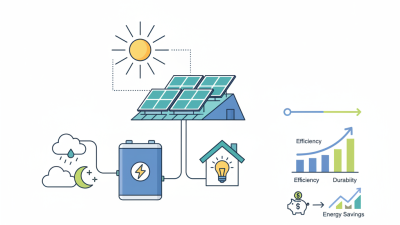
How solar batteries store daytime electricity and return it for use after sunset

Solar panels send direct-current electricity to a battery through a charge controller or hybrid inverter. The battery stores the energy chemically and releases it later when household demand exceeds solar production. Round-trip efficiency measures how much energy can be recovered after one complete charge-and-discharge cycle. The values shown are typical technology-level ranges compiled from widely reported specifications by the U.S. Department of Energy, NREL, IRENA, and battery industry reference data; actual performance varies with temperature, power level, age, and system design.

Which Factors Matter When Choosing a Solar Power Battery?

Choosing a solar power battery starts with usable energy, not the advertised capacity. A 10 kWh battery may deliver less after reserve limits and conversion losses. NREL’s 2024 Annual Technology Baseline models utility-scale lithium-ion systems near 85% round-trip efficiency. Therefore, buyers should compare delivered energy, not only storage size. Daily consumption, evening load, and backup priorities also matter. A larger battery can become expensive unused space.

Battery chemistry affects safety, lifespan, weight, and temperature performance. Check cycle-life testing, operating temperature, ingress protection, and documented safety certification. IEC 62619 is relevant for industrial lithium-based battery safety. The warranty should state usable capacity retention, cycle limits, and service conditions clearly. Vague promises deserve caution. Installation quality matters too, especially in humid coastal homes or cold inland regions.

Price comparisons should include inverters, wiring, monitoring, installation, and future replacement. The IEA reported that global battery storage additions in the power sector reached about 42 GW in 2023, showing rapid market expansion. Yet fast growth does not guarantee equal quality. NREL data suggests efficiency and degradation assumptions can materially change project economics. I would not choose the cheapest battery blindly. A spreadsheet may also miss local repair access, software support, and grid rules. These practical details often decide whether a battery performs well after five quiet winters.

How the 10 Best Solar Power Batteries Compare

The 10 best solar power batteries differ more than their polished specifications suggest. I compare usable capacity, round-trip efficiency, cycle life, warranty length, and installation requirements. A 10 kWh battery may deliver only 8 kWh after reserve settings and conversion losses. That detail matters during a long evening outage.

The strongest options usually provide 90% or higher round-trip efficiency and clear battery management data. Some favor compact wall mounting, while others support modular expansion for larger homes. Cold-weather performance also separates them. A battery rated for 5°C operation may need heating below that temperature.

I check enclosure protection, thermal controls, backup switching speed, and recognized electrical safety certification. These details affect real household use more than peak output alone.

Price comparisons require care.
A lower purchase price can hide extra installation work, limited monitoring, or a shorter warranty. The ten leading systems often range from small daily-use units to larger backup designs above 20 kWh. Usable capacity should match evening loads, not just the solar array’s size. My comparison is not flawless because local tariffs, climate, and installer quality change the result. I would also question impressive cycle claims when testing conditions are unclear. A practical buyer should request written degradation terms, service coverage, and battery recycling arrangements before choosing.

Which Solar Battery Fits Different Global Energy Needs?

The best solar battery is not universal. A coastal apartment, a rural clinic, and a cold-weather home need different storage designs. The International Energy Agency reported that global battery storage capacity may need to increase sixfold by 2030. This growth will serve diverse grids, not one standard customer.

For urban homes, a compact lithium iron phosphate system can reduce evening grid purchases. Check usable capacity, not only the advertised size. A 10 kWh battery may deliver less after reserve limits and conversion losses. For farms or small businesses, choose scalable storage with strong cycle performance. IRENA’s electricity storage analysis highlights flexibility as a key value for integrating variable renewable power. In areas with frequent outages, automatic transfer, surge capacity, and local maintenance matter more than maximum energy density.

Off-grid users need a different calculation. Size the battery for several cloudy days, while considering generator support and seasonal sunlight. NREL’s Storage Futures Study links battery value to operating conditions, system design, and grid services. Temperature also changes performance. Heat can accelerate degradation, while freezing conditions can restrict charging. No shortlist is flawless. A spreadsheet can still miss dust, humidity, transport delays, or technician availability. Buyers should verify safety certifications, warranty conditions, recycling arrangements, and inverter compatibility before comparing prices. The cheapest battery may become expensive when replacement parts cross borders.

How to Install, Maintain, and Replace a Solar Power Battery

Installing a solar power battery begins with a site check, not a quick connection. Confirm the battery chemistry, voltage, usable capacity, and inverter compatibility. A qualified electrician should inspect wiring, grounding, ventilation, and local electrical requirements. Keep the unit away from direct sunlight, standing water, heaters, and flammable materials. Leave the manufacturer’s required clearance around the enclosure. Mark the emergency disconnect clearly.

Maintenance should be simple and recorded. Check terminals for corrosion, loose cables, swelling, cracks, leaks, or unusual smells. Do not open a sealed battery. Never touch damaged wiring. For lead-acid systems, inspect electrolyte levels only when the design allows it, using suitable protective equipment. Lithium-based systems need temperature monitoring and software alerts. Record charge cycles, fault codes, and unusual performance. Small changes matter. A neglected log can hide gradual capacity loss.

Replacement becomes necessary when storage drops sharply, faults repeat, or physical damage appears. Switch off the system using the approved shutdown procedure, then verify isolation with proper test equipment. Do not mix old and new batteries unless the system documentation permits it. Battery removal can involve dangerous weight and stored energy. Use a trained technician and send the old unit to an authorized recycling or collection facility. A perfect maintenance routine is unrealistic. The better goal is consistent checking, careful records, and early action.

10 Best Solar Power Batteries for Global Buyers? - How to Install, Maintain, and Replace a Solar Power Battery

Rank Battery Type / Best Use Typical Usable Capacity Nominal Voltage Round-Trip Efficiency Expected Cycle Life Recommended DoD Operating Temperature Installation Guidance Maintenance and Replacement Notes
1 Residential LFP Battery
Best overall choice for daily home solar storage
5–20 kWh per module 48–51.2 V 90–95% 4,000–8,000 80–90% 0–45°C charging; −20–55°C discharging Install indoors or in a shaded, ventilated enclosure. Use a compatible inverter, battery-management system, correctly sized DC protection, and approved cable lengths. Inspect terminals and event logs periodically. Replace when capacity falls below the required level, repeated protection trips occur, or the battery-management system reports a permanent fault.
2 High-Voltage LFP Battery
Best for efficient hybrid-inverter systems
8–30 kWh per stack 150–600 V 92–97% 4,000–7,000 80–90% 0–45°C charging; −20–55°C discharging Installation should be performed by a qualified electrician because high-voltage DC can be hazardous. Confirm inverter communication, insulation monitoring, grounding, and emergency shutdown provisions. Keep firmware and communication settings aligned. Replace the complete stack or approved module only after isolation, voltage verification, and manufacturer-approved service procedures.
3 48 V LFP Rack Battery
Best for modular homes, cabins, and small businesses
4.8–16 kWh per rack unit 48–51.2 V 90–95% 3,500–7,000 80–90% 0–45°C charging; −20–55°C discharging Mount modules on a load-rated rack with ventilation and sufficient clearance. Use DC breakers or fuses, equal-length parallel cables, and a properly configured battery monitor. Check rack stability, cable torque, and temperature readings every 6–12 months. Replace modules with matching voltage, chemistry, age, and capacity whenever possible.
4 Portable LFP Power Station
Best for travel, emergency backup, and temporary loads
0.3–5 kWh 12–48 V internal pack 80–92% 2,000–4,000 80–100% Usually 0–45°C charging; −20–45°C discharging Place on a dry, stable surface with unobstructed air inlets and outlets. Connect solar input only within the stated voltage and current limits. Store partly charged in a cool, dry location and recharge periodically. Do not open the enclosure; replace the unit if it swells, overheats, smells abnormal, or loses substantial capacity.
5 AGM Lead-Acid Battery Bank
Best for low-cost backup and occasional use
1–10 kWh per bank 12 or 24 V 75–85% 500–1,200 50% −15–40°C charging and discharging Install in a clean, dry, ventilated area. Provide overcurrent protection and avoid placing batteries directly on a damp floor or near ignition sources. Keep fully charged after use and periodically test voltage and capacity. Replace when resting voltage drops quickly, runtime is substantially reduced, or the case shows swelling or leakage.
6 Flooded Lead-Acid Battery
Best where low purchase cost and regular servicing are acceptable
1–10 kWh per bank 12 or 24 V 70–85% 400–1,200 30–50% −15–40°C charging and discharging Use a dedicated, well-ventilated battery room. Protect against acid exposure, install suitable fuses, and maintain correct charging voltages for the ambient temperature. Check electrolyte level, specific gravity, corrosion, and terminal tightness using appropriate protective equipment. Replace if plates are damaged, capacity testing fails, or electrolyte loss becomes excessive.
7 Nickel-Iron Battery
Best for harsh climates and long service life
2–20 kWh per bank 12–120 V 60–80% 5,000–11,000 70–80% −20–45°C charging and discharging Provide strong ventilation, spill containment, and a charger designed for the battery chemistry. Account for higher self-discharge and lower electrical efficiency during system sizing. Monitor electrolyte level and concentration according to the service schedule. Replace electrolyte or individual cells only with trained personnel and approved materials.
8 Residential Sodium-Ion Battery
Best for cold-weather applications and emerging storage systems
3–15 kWh per module 24–48 V 85–92% 3,000–6,000 80–90% Often −20–45°C charging; −30–55°C discharging Use only a charger and inverter with sodium-ion battery profiles. Confirm local certification, communications compatibility, enclosure rating, and cold-weather charging limits. Review temperature and state-of-charge records. Since product standards vary, replace modules only with approved units that match the original voltage, firmware, and chemistry.
9 Second-Life EV Battery System
Best for cost-conscious large-scale stationary storage
10–100+ kWh per system 200–800 V 85–94% 1,000–4,000 additional cycles 60–80% Typically 0–45°C charging; −20–50°C discharging Require professional testing of state of health, insulation, thermal behavior, and cell balance before installation. Use a battery-management system specifically designed for the pack. Track cell voltage spread and thermal performance closely. Replace the affected module when imbalance, rapid capacity loss, or abnormal heating exceeds safe operating limits.
10 Flow Battery System
Best for commercial and utility-scale long-duration storage
50 kWh–multi-MWh System-dependent DC voltage 65–85% 10,000–20,000+ 80–100% Usually 10–40°C electrolyte operation Install on a reinforced, level foundation with ventilation, spill containment, pumps, sensors, and access for service. Complete chemical and electrical safety reviews before commissioning. Inspect pumps, filters, piping, electrolyte balance, and sensors according to the service plan. Replacement generally involves pumps, membranes, or electrolyte rather than the entire energy-storage tank.
Selection note: Actual capacity, efficiency, cycle life, temperature limits, installation method, and replacement interval vary by cell design, depth of discharge, charging profile, ambient conditions, inverter compatibility, and local electrical codes. Battery installation and high-voltage servicing should be completed by qualified professionals.