2026 Top Solar Panel Kit with Battery Buying Guide
Choosing the right solar panel kit with battery in 2026 requires more than comparing wattage and advertised savings. A complete system must match your home’s energy habits, roof space, climate, and backup expectations. A small cabin may need a compact 2,000-watt system. A family home could require higher inverter capacity and several battery modules. Numbers matter.
The market is changing quickly. Battery chemistry, monitoring software, warranty terms, and installation quality can affect real performance more than a glossy efficiency claim. IEA Executive Director Fatih Birol described solar power as “the new king of electricity markets,” highlighting its growing role in modern energy systems. Storage makes that solar power more useful after sunset, during cloudy periods, and during unexpected outages.
This guide examines the 2026 top solar panel kit with battery options through practical criteria. We consider usable battery capacity, continuous output, charging speed, expandability, safety features, and long-term support. We also examine what the package actually includes. Some kits exclude critical cables, mounting hardware, or professional setup.
That detail can surprise buyers.
Real-world performance is rarely perfect. Dust, winter shading, heat, and uneven household loads can reduce expected output. A larger battery is not automatically better if daily consumption remains low. I may sound cautious, but careful sizing usually prevents expensive disappointment. The strongest choice balances reliable power, transparent specifications, sensible installation requirements, and a warranty you can understand. This buying guide helps readers compare those details before committing their money.
Solar Panel Kits with Batteries: Key Components and How They Work
Solar panel kits with batteries combine panels, a charge controller, an inverter, wiring, protection devices, and energy storage. Panels produce direct current (DC). The controller regulates charging and protects the battery from harmful voltage levels. The inverter converts DC into alternating current (AC) for household appliances.
The battery stores unused daytime electricity for evening loads or outages. Its usable capacity matters more than its advertised capacity. A 10 kWh battery may deliver less after reserve settings and conversion losses. Small details matter. BloombergNEF’s 2024 Battery Price Survey reported an average lithium-ion pack price of 115 dollars per kWh, showing why storage costs remain important in a 2026 buying decision. However, cheaper storage does not always mean better value. Thermal management, cycle life, warranty limits, and installation quality deserve equal attention.
The International Energy Agency reported nearly 420 gigawatts of new solar photovoltaic capacity worldwide in 2023. This rapid growth makes kit quality and system matching increasingly important. Select panel output according to roof space, local sunlight, and seasonal demand. Then size the battery around essential loads, not every appliance. A refrigerator, router, lights, and medical equipment need different priorities than an electric heater. Check inverter surge capacity carefully. Motors can briefly demand several times their running power. Real-world results may disappoint if shading, dust, or weak wiring is ignored. That is the part many buying guides understate. A professional load assessment can prevent an expensive mismatch.
2026 Top Solar Panel Kit with Battery Buying Guide
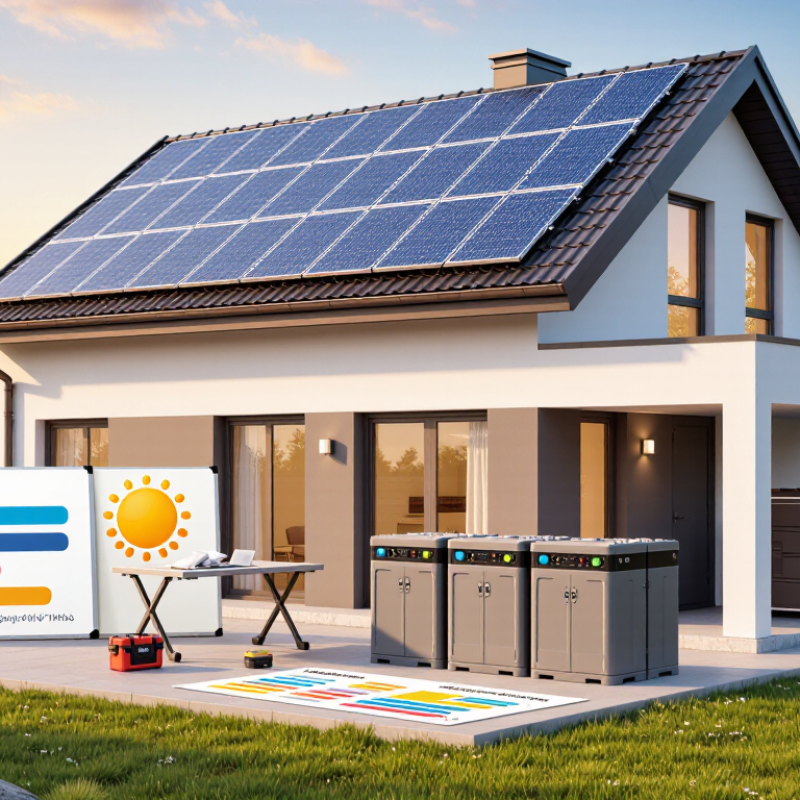
Comparison of common residential solar-plus-battery configurations. Usable battery energy assumes a 90% depth of discharge, while estimated daily solar production assumes 4 peak-sun-hours and 80% overall system efficiency.
How the system works: Solar panels generate DC electricity, an inverter converts it to household AC power, and the battery stores surplus energy for use after sunset or during outages. Larger systems provide greater generation and storage capacity but typically require more installation space and higher upfront costs.
How to Assess Your Home’s Energy Needs and Solar Potential
Before choosing a solar panel kit with a battery, measure how your home uses electricity. Review twelve months of utility bills, not just one summer statement. Note daily loads, including refrigerators, pumps, heating equipment, and evening appliances. A simple spreadsheet can reveal whether energy use peaks at noon or after sunset.
Solar potential depends on roof direction, pitch, shade, and local weather. Observe shadows in the morning, at noon, and late afternoon. Trees may look harmless in winter but block panels during summer growth. A licensed installer should check roof condition, wiring, permits, and structural capacity. Online calculators help, but they cannot see every chimney or nearby building. My early estimates ignored short winter days. That mistake changed the required battery size.
Tips: List essential backup circuits separately. Compare usable battery capacity, not advertised capacity. Ask about temperature limits, warranty terms, replacement access, and installation testing. Keep emergency loads realistic. A battery sized for every appliance may cost more than expected and still drain quickly during cloudy weather.
For accurate planning, compare your measured consumption with the panel’s expected seasonal output. Local solar data and a professional site assessment provide stronger evidence than guesswork. Check whether the system can expand later, especially if an electric vehicle or heat pump is planned. Battery power rating also matters. Capacity tells how long it runs; power rating tells which appliances can start together. Small details matter. A refrigerator surge can challenge an undersized inverter.
Comparing Battery Capacity, Solar Output, and System Efficiency
2026 Top Solar Panel Kit with Battery Buying Guide
Battery capacity should match your evening demand, not your hopes. A 5 kWh battery may provide only 4 kWh of usable energy after reserve limits. List essential loads, such as a refrigerator, lights, router, and medical equipment. A small apartment may need 3–6 kWh overnight. Larger homes can exceed 10 kWh quickly. More capacity also means greater weight, cost, and charging time.
Solar output is measured in watts, but daily energy is measured in kilowatt-hours. A 2 kW array might produce about 8 kWh on a four-hour sunny day. Weather, roof direction, shade, dust, and temperature reduce that figure. Check the panel’s real operating conditions, not only its laboratory rating. Winter output may be disappointing.
Efficiency connects the whole system. Panel, inverter, battery, and cable losses can reduce useful energy by 15–25 percent. Round-trip battery efficiency matters when energy is stored and later recovered. Compare the system’s continuous output with your appliances’ starting demand. A battery can hold enough energy yet fail to start a pump. That mistake is common. I would also leave room for future loads, while admitting that my own first estimate was too optimistic. Annual production data, warranty terms, installation quality, and local service deserve equal attention before purchase.
Evaluating Installation Types, Safety Features, and Maintenance Needs
Choosing a solar panel kit with a battery starts with the installation setting. Rooftop systems save ground space, but roof age, shading, and structural strength require careful inspection. Ground-mounted systems offer easier access and better positioning. Portable kits suit cabins or temporary needs, although their cables face more weather exposure. Hybrid systems can support household circuits during outages, while off-grid kits demand accurate load calculations.
Safety features deserve close attention. Look for battery management systems, temperature sensors, enclosed terminals, and clearly labeled disconnect switches. A qualified electrician should verify wiring, grounding, ventilation, and local requirements before energizing the system. Keep batteries away from standing water, heat sources, and blocked service areas. Small oversights matter. Never place a heavy battery on an uncertain shelf or route cables under sharp metal edges.
Maintenance is usually simple, not effortless. Inspect connectors every few months for looseness, corrosion, or heat marks. Clean panels with soft water and a non-abrasive tool when dust reduces output. Review inverter alerts and battery readings after storms or unusual shutdowns. Keep a basic performance log. My early checklist missed seasonal shading from a nearby tree, and the lost output was easy to overlook. Battery capacity also changes with age and temperature, so replaceable components and accessible service panels can matter more than impressive peak specifications.
Choosing the Best Solar Panel Kit for Your Budget and Usage Goals
Choosing the best solar panel kit begins with your daily electricity habits, not the largest advertised wattage. A small household using 6 kWh daily may need roughly 2 kW of panels, depending on sunlight, roof direction, and seasonal losses. The International Energy Agency’s Renewables 2024 report expects solar power to provide most new renewable capacity through 2028. That growth does not remove the need for careful sizing.
Match battery capacity to your priority.
For evening lighting and refrigeration, a battery holding 5–10 kWh may be practical for many homes. Backup users should calculate essential loads, starting currents, and outage length. Check usable capacity, not only the quoted total capacity. Round-trip efficiency matters too. The U.S. Department of Energy notes that storage performance depends on temperature, controls, and operating conditions.
Pay attention to panel quality and installation details. The National Renewable Energy Laboratory reports typical photovoltaic degradation near 0.5% per year, though real results vary. Shading at 3 p.m. can matter more than a small efficiency difference. Battery placement also matters; extreme heat can reduce performance. I would compare total installed cost, monitoring features, warranty terms, and replacement access. Cheap can become expensive.
My own caution is simple: production estimates are often optimistic, especially during cloudy winters. Use local solar data, leave some capacity headroom, and review one year of electricity bills before buying.